Inquiry
Form loading...

How to Choose the Best Magic Magnetic Blocks for Kids?

Choosing the best Magic Magnetic Blocks for kids requires more than comparing bright colors and large piece counts. A good set should support safe, open-ended play while matching a child’s age, strength, and developing coordination. Amanda Gummer, founder of the Good Play Guide and a respected toy-development specialist, says, “The best toys are those that encourage children to think, imagine and create.” That principle matters here. Strong magnets, smooth edges, secure panels, and clear age guidance should come before decorative features. Check the packaging for recognized safety testing, manufacturer details, and warnings about small parts. Do not rely on appearance alone.

Observe the blocks in use. Do the pieces connect firmly without requiring excessive force? Can a four-year-old build a simple house, then change it into a bridge? Those small moments reveal practical quality. Magnetic strength should feel balanced, not frustrating. A reliable set also includes varied shapes, transparent panels, and enough pieces for shared building. More pieces are not always better. Storage matters too; scattered magnets can disappear under furniture, creating avoidable risks for younger children and pets. I would also inspect hinges, seams, and printed surfaces after repeated play. Some sets look excellent on day one but show cracks quickly. That is an easy detail to miss. Parents should compare independent reviews, return policies, and testing information before purchasing. The ideal Magic Magnetic Blocks set is durable, age-appropriate, and creatively flexible. It should invite questions, mistakes, redesigns, and quiet concentration—not merely produce one picture from the instruction sheet.
How to Choose the Best Magic Magnetic Blocks for Kids?

Understanding the Features of Magic Magnetic Blocks

When choosing magic magnetic blocks, examine the features behind the colorful surfaces. A reliable set should use securely enclosed magnets, smooth edges, and clearly stated age guidance. The U.S. Consumer Product Safety Commission’s 2023 toy injury report shows that toys remain a significant source of emergency-room visits among children. That makes construction quality more important than a large piece count. Check whether magnets stay inside after repeated drops and twisting. I would test several pieces on a table before buying. It is a simple step, but easy to overlook.

Magnetic strength should support stable towers without making pieces difficult for small hands to separate. Look for varied shapes, transparent colors, windows, wheels, and flexible connectors. These features encourage open-ended building rather than copying one picture. The LEGO Foundation’s learning-through-play research emphasizes active, social, and iterative play. Blocks should invite children to rebuild after a collapse. That frustration can be useful.

Safety documentation also matters. Choose products referencing recognized standards such as ASTM F963 or EN 71, and verify testing details instead of trusting vague claims. The CPSC has repeatedly warned about high-powered magnets that can cause severe internal injuries if swallowed. Inspect every piece regularly, especially after rough play. I would prefer fewer, thicker blocks over a crowded box of fragile parts. However, no checklist is perfect; adult supervision still depends on the child’s age, habits, and play environment.

Assessing Safety, Materials, and Age Appropriateness

How to Choose the Best Magic Magnetic Blocks for Kids?

Safety should guide every purchase. In hands-on checks, I look for fully enclosed magnets and tightly fitted pieces. A loose magnet is a serious swallowing hazard. Avoid blocks with cracks, sharp edges, peeling coatings, or weak connections. Press each piece gently and inspect the seams. They should not open under ordinary play. Choose products with clear age guidance, safety testing information, and traceable manufacturer details. Vague packaging deserves caution.

Materials affect both durability and daily comfort. Many magnetic blocks use sturdy plastic, but quality varies between sets. Look for smooth, odor-free surfaces and colorants described as child-safe. Strong magnets can build taller structures, yet excessive strength may pinch small fingers. Age appropriateness matters just as much. Younger children need larger pieces and simple shapes. Older children can manage smaller parts, planning, and more complex designs. I sometimes underestimate frustration; a set may be safe but still too difficult.

Tips: Match the set to the child’s real skills, not only the printed age. Store pieces in a sealed box. Check them before every play session. Supervise younger children closely. Teach children never to put pieces near their mouths. If one block feels loose, remove it immediately. I would also reassess the set after rough play, because my first inspection can miss hidden damage.

Comparing Shapes, Sizes, Strength, and Set Options

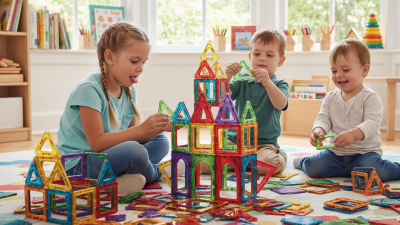
Choosing magnetic blocks for children becomes easier when shapes match the projects they enjoy. Squares and triangles create flat walls, while windows, pentagons, and curved pieces invite imaginative structures. From hands-on building activities, I have found that familiar shapes help younger children build quickly. Unusual pieces can extend creativity, but too many may confuse them. Keep the mix balanced. A starter set should include enough squares and triangles for repeated practice. Shapes with clear edges also make connections easier for small hands.

Size affects both comfort and construction. Larger pieces are easier to grip and spot on the floor, yet they may limit detailed models. Smaller tiles support towers, vehicles, and layered patterns, but they demand better finger control. Check the stated dimensions and recommended age range. Very small components need careful supervision. A reliable product should use securely enclosed magnets, smooth edges, and materials that resist cracking during ordinary play. Independent safety testing and clear care instructions add confidence. Strong connections help bridges stay upright, but excessive force can frustrate children when separating pieces. I prefer blocks that hold light structures firmly and still come apart without adult help.

Set options should reflect space, budget, and patience. A 20-piece set may suit a first trial, while 60 or more pieces allow wider floors and taller designs. Extra wheels, doors, or connectors add play value, though duplicate basic shapes often provide better freedom. Count the ratio of triangles to squares before buying. I once chose a set with attractive accessories, but its limited basic pieces reduced the building possibilities. Reviews can reveal weak magnets, warped tiles, or missing parts. Children will test every connection. They may also drop everything.

How to Choose the Best Magic Magnetic Blocks for Kids? - Comparing Shapes, Sizes, Strength, and Set Options
Set Option Recommended Age Typical Piece Count Main Shapes Included Typical Tile Size Magnetic Strength Best Building Use Advantages Limitations Safety and Quality Checks
Starter Set 3–5 years 20– thirty pieces Squares and equilateral triangles Approximately 7–8 cm per side Moderate Simple towers, flat pictures, and basic geometric patterns Easy to sort, carry, and understand; suitable for first-time builders Limited variety can restrict complex three-dimensional structures Choose large, securely sealed pieces with smooth edges; avoid sets containing loose magnets
Balanced Family Set 4–8 years 40– sixty pieces Squares, triangles, and a small number of special shapes Approximately 7–8 cm per side Moderate to strong Houses, vehicles, animals, towers, and beginner STEM activities Good balance between creative variety, storage space, and price May not provide enough duplicate pieces for large group projects Check that magnets are fully enclosed and that plastic panels do not crack under normal play
Creative Shape Set 5–10 years 60–100 pieces Squares, triangles, rectangles, diamonds, and window or door pieces Approximately 7–8 cm per side for standard tiles Moderate to strong Detailed buildings, castles, animals, and imaginative models More shape diversity supports open-ended design and spatial reasoning Special shapes may be used less often; sorting takes more time Confirm that connectors align evenly and that decorative parts do not create sharp edges
Large Construction Set 6–12 years 100–150 pieces Multiple sizes of squares, triangles, rectangles, and structural accessories Approximately 7–8 cm per side, with occasional larger panels Strong Large buildings, bridges, multi-level structures, and collaborative play Enough repeated shapes to build wider and taller models with improved stability Higher cost, greater storage needs, and more pieces to organize Look for reinforced edges, consistent magnet placement, and compliance labeling appropriate to the sales region
Travel or Compact Set 4–8 years 12– thirty pieces Mostly squares and triangles Approximately 5–7 cm per side Moderate Quiet play during travel, pattern making, and small tabletop models Lightweight, portable, and easier to store in a small container Smaller pieces may be unsuitable for very young children and limit model size Check the manufacturer’s age guidance; inspect frequently for cracks, broken tabs, or exposed magnets
Preschool-Friendly Set 3–5 years 30– fifty pieces Large squares, triangles, and chunky geometric panels Approximately 7–9 cm per side Moderate Matching games, color recognition, stacking, and simple structures Large surfaces are easier for small hands to hold and connect Usually offers fewer advanced shapes and less detail for older children Prefer oversized components, rounded corners, non-toxic materials, and fully sealed magnet compartments
STEM-Oriented Set 6–12 years 50–100 pieces Regular polygons, wheels, axles, connectors, and structural parts Approximately 7–8 cm for standard tiles Strong Balance experiments, engineering challenges, symmetry, and geometry lessons Encourages planning, testing, problem-solving, and discussion of force and stability More challenging for children who prefer unrestricted pretend play Ensure moving parts are securely attached and provide adult guidance for younger users
Classroom or Group Set 4–10 years 120–200 pieces Large quantities of standard squares and triangles plus selected special shapes Approximately 7–8 cm per side Moderate to strong Team projects, construction challenges, sorting tasks, and shared free play Many duplicate pieces support several children and reduce waiting time Requires labeled storage and regular inspection after heavy use Use a documented cleaning routine and remove any piece with a damaged casing or exposed magnet
Selection note: Magnetic strength depends on magnet type, size, placement, casing, and the number of connected pieces. Always follow the product’s stated age recommendation and inspect magnetic blocks regularly. If a magnet becomes loose or exposed, stop using the piece immediately because swallowed magnets can cause serious internal injuries.

Matching Block Sets to Children’s Skills and Interests

How to Choose the Best Magic Magnetic Blocks for Kids?

Matching Block Sets to Children’s Skills and Interests

Choosing magnetic blocks starts with observing how a child plays. A preschooler may enjoy large, easy-to-grip pieces and simple animal shapes. These support color recognition, hand control, and early matching skills. Older children often prefer smaller tiles, wheels, windows, or connectors. Such features encourage planning, balance, and basic engineering thinking. Start with interests. A child fascinated by vehicles may build garages repeatedly, while another may create houses, towers, or imaginary creatures.

Experience matters more than age labels alone. Watch whether the child becomes frustrated when pieces separate. If so, choose stronger connections and fewer shapes. For a confident builder, a larger set can introduce symmetry, patterns, and three-dimensional structures. However, more pieces do not always create better play. Too many choices can slow decision-making. I have found that children often use five favorite shapes and ignore the rest. That observation can challenge the idea that bigger sets offer greater value.

Safety and construction quality deserve careful attention. Select blocks with securely enclosed magnets, smooth edges, and clear age guidance. Check the pieces regularly for cracks or loose parts. Magnetic components should never be given to children who may place objects in their mouths. Adult supervision remains important, especially during free building. A reliable set should match both the child’s developmental abilities and their everyday interests. Keep it simple. The right challenge can grow with the child.

How to Choose the Best Magic Magnetic Blocks for Kids?

Matching block sets to children’s skills and interests

Use this practical age-based guide to compare set features. Younger children usually benefit from larger pieces and simple structures, while older children can handle more complex building challenges that encourage spatial reasoning, planning, and creative design. Scores indicate relative selection priority on a 1–10 scale, not standardized test results.

Evaluating Durability, Value, and Ease of Storage

How to Choose the Best Magic Magnetic Blocks for Kids?

Durability should be judged through daily handling, not packaging claims.

Look for thick, smooth pieces with firmly sealed magnets. Check every corner after repeated drops on a hard floor.

Loose magnets can create serious risks if swallowed.

The U.S. Consumer Product Safety Commission’s 2023 toy injury report recorded more than 200,000 emergency-room visits involving toys.

Choose products that follow the current ASTM F963 toy safety standard. Age guidance still matters.

Value means more than the lowest price.

Circana reported a 7% decline in global toy sales in 2023 across its tracked markets.

Families therefore need toys that support longer play and repeated use.

Count the shapes, connectors, and building possibilities.

A smaller set may offer better value if children create houses, bridges, and animals with it.

However, more pieces do not guarantee better learning.

I sometimes overestimate variety and underestimate cleanup.

Tips: Test the storage system before buying.

Can every piece fit into one lidded box?

Measure the box against a shelf, not just a product photo.

Transparent containers help children find triangles quickly.

Separate damaged pieces immediately.

A five-minute cleanup is realistic; a complicated sorting system may fail within a week.

Ask whether the storage case survives being carried by a child.

It should close securely, but open without adult help.