
Wholesale buyers are reassessing Small Magnetic Blocks as compact, reusable products for educational stores, gift shops, and children’s activity ranges. The global construction toys market continues to benefit from hands-on learning demand, according to Grand View Research. Circana’s toy-market reporting also shows that value, durability, and play longevity strongly influence purchasing decisions. These findings matter when every carton must earn shelf space.
Small Magnetic Blocks should not be judged by color alone. Magnet strength, edge finishing, connector consistency, packaging clarity, and age guidance deserve closer inspection. The Toy Association’s industry research repeatedly links open-ended play with creativity, problem-solving, and longer product engagement. Dr. Amanda Gummer, founder of the Good Play Guide, has stated, “Play is not a luxury; it is a necessity.” Her point supports a practical buying principle: products should invite meaningful play, not simply look attractive in a catalog.
Safety remains non-negotiable. Buyers should request documented testing against applicable requirements, such as ASTM F963 or EN 71, depending on the target market. They should also verify magnet testing, batch traceability, and warning labels. A low unit price can become expensive after returns. That part is often overlooked.
The following selection compares seven Small Magnetic Blocks for wholesale use, focusing on durability, educational value, packaging efficiency, and supplier reliability. Some products may perform well in demonstrations but disappoint during repeated classroom handling. Real samples are still essential. No report replaces them.
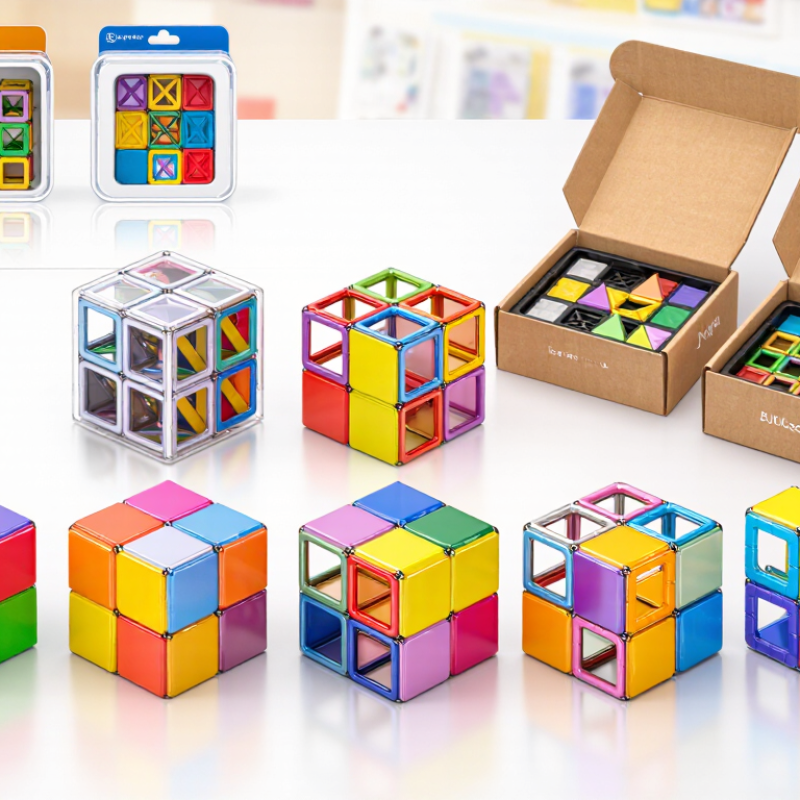
For wholesale buyers, seven small magnetic block types deserve comparison by size, holding strength, and MOQ.
A 5 mm cube suits compact assemblies but offers limited grip.
An 8 mm cube gives better handling and usually supports light-duty packaging fixtures.
The 10 mm cube is a practical middle option for displays and small closures.
A 12 mm cube provides stronger attraction, though its added weight affects shipping costs.
A 15 mm cube delivers the highest holding force among these cubes, but it needs more storage space.
A 10 × 5 × 3 mm rectangular block fits narrow channels and can align more easily than cubes.
A 20 × 10 × 5 mm block offers broad contact, making it useful for panels and lightweight hardware.
Strength depends on magnetic grade, orientation, coating, and the steel surface tested. Do not compare supplier claims alone. Ask for pull-force data using a stated test method.
I also check chipped edges, coating bubbles, and dimensional tolerance before approving bulk orders. Small defects matter.
Typical MOQs may range from 500 pieces for standard cubes to 5,000 pieces for custom sizes or special coatings. These figures vary by factory capacity and packaging requirements.
Buyers should request samples from the same production line. A sample can feel strong, yet perform poorly after repeated separation. That weakness is easy to miss.
For price analysis, compare cost per usable unit, not merely cost per kilogram. Also confirm carton weight, packing direction, and inspection standards before placing a large order.
For wholesale buyers, magnetic block selection starts with working conditions, not a catalog strength number.
NdFeB grades provide high pull force in compact blocks, useful for small assemblies and tight packaging. Higher grades tolerate more heat, but they do not automatically deliver longer service life. Check the operating temperature, load direction, air gap, and impact risk before choosing a grade. A 40°C storage room and a 100°C fixture need different decisions. Small details matter.
Ferrite blocks offer lower magnetic strength, yet they resist corrosion well and usually cost less at volume. They suit separators, educational kits, cabinet catches, and applications with generous space.
Their heavier, brittle structure needs careful edge protection during transport. I once underestimated chipped corners during carton handling. The magnetic performance remained acceptable, but the appearance failed inspection. That was preventable.
Wholesale samples should face drop, pull, and repeated-cycle checks before final quantities are approved.
Their heavier, brittle structure needs careful edge protection during transport. I once underestimated chipped corners during carton handling. The magnetic performance remained acceptable, but the appearance failed inspection. That was preventable.
Coatings protect NdFeB from moisture, salt exposure, and handling damage.
Nickel-based finishes are common, while epoxy coatings add a useful barrier in humid environments. No coating is universal. Scratches, sharp edges, and trapped water can shorten service life. Ask suppliers for coating thickness, adhesion results, grade tolerances, and aging data.
Also verify magnetization direction and block dimensions. A small tolerance error can stop automated assembly. Service-life estimates should reflect real use, not only laboratory conditions.
Conservative promises are more reliable.
Small magnetic blocks require more than attractive colors and tight connections. Their critical safety question is magnetic strength. ASTM F963-23 and EN 71-1 use magnetic flux measurements to assess hazardous magnets. The commonly referenced benchmark is 50 kG²·mm², calculated from magnetic flux density and pole area. A product near this level deserves careful review. The number is not a substitute for the complete standard.
Wholesale buyers should request recent laboratory reports for the exact block design, magnet type, and production batch. Ask whether testing followed the correct standard, sample condition, and measurement method. Coatings may crack after repeated impact, exposing a magnet inside. Test records should therefore include durability checks, dimensions, material details, and traceable sample identification. A supplier declaration alone is not enough.
Inspect samples yourself, too. Drop several blocks onto a hard test surface, examine seams with a magnifier, and check whether pieces separate unusually easily. Keep packaging and age guidance consistent with the tested product. One passing sample cannot represent every future batch. This is an easy mistake. Manufacturing variation, assembly pressure, and coating thickness can change performance. An independent, competent laboratory provides stronger evidence, but even laboratory data needs thoughtful purchasing controls.
Small magnetic blocks look simple, but wholesale success depends on measurable controls. Start with MOQ, not the catalog price. A lower MOQ may raise the FOB cost because tooling, packaging, and inspection expenses are spread across fewer units. Request tiered quotes for 500, 1,000, and 5,000 sets. Compare the same magnet strength, block count, packaging, and carton size. The World Bank’s 2023 Logistics Performance Index reported that international shipments can take about 44 days from port entry to final destination. Plan cash flow around that delay. Delays happen.
FOB cost should include export packing and origin handling, but not ocean freight or destination charges. Ask for a written cost sheet. For lead time, separate sample approval, production, inspection, and vessel booking. A realistic purchase schedule often needs 30–45 production days, plus transport.
Set a measurable defect target. An internal goal below 1% is practical for many low-risk batches, but AQL is a sampling method, not a promise of zero defects. Check loose parts, chipped coatings, weak closures, and damaged cartons. Record results by batch.
Tips: Require pre-shipment photos, a retained sample, and an independent inspection. Use the latest UNCTAD Review of Maritime Transport for shipping-risk context. Review your target after every order. Perfect forecasts are rare.
Quality control should guide every shortlist of small magnetic blocks. ISO 2859-1 provides a structured sampling method for each production lot. It prevents buyers from checking only attractive samples. AQL 1.5 can define acceptable defect limits, but it is not a guarantee of zero defects. Inspectors should record lot size, sample quantity, defect categories, and final decisions. Missing records weaken otherwise careful purchasing.
Tips: Request test reports and retain sealed samples. Check chipped corners, loose parts, weak connections, and inconsistent dimensions. Small details matter.
Polarity checks deserve special attention. Each block should connect in the intended direction, without unexpected repulsion. A simple polarity gauge or calibrated testing fixture can reveal reversed magnets. Test several pieces from different cartons. Do not trust one perfect sample.
Drop tests add practical evidence. Use a fixed height, hard but consistent surface, and repeated impacts. Inspect cracks, separated shells, exposed magnets, and connection changes afterward. The exact method should match the product’s expected handling conditions. A 1.2-meter drop may represent warehouse handling, but it may not reflect every shipment. That limitation should be documented. Some inspection plans are too optimistic. Review failed samples with photographs and measured data, not assumptions. Reliable suppliers should explain corrective actions and repeat testing when results are unclear.