
Inquiry
Form loading...

China Top Magic Blocks Magnetic Suppliers?

China Top Magic Blocks Magnetic Suppliers? This question deserves more than a simple supplier ranking. China remains a major manufacturing base for construction toys, supported by mature molding, magnet assembly, packaging, and export networks. Fortune Business Insights valued the global toys market at approximately US$108.7 billion in 2023. Its research also indicates continued demand for educational and construction-focused products.

The opportunity is visible. The risk is less obvious.

Market reviews from Grand View Research and Statista Market Insights show growing interest in educational toys, but magnetic-block data is often grouped with broader construction-toy categories. This makes direct supplier comparisons difficult. A factory may advertise strong magnets, bright ABS parts, and fast delivery. Those claims still require verification. Buyers should examine magnet consistency, plastic quality, age labeling, batch traceability, packaging protection, and third-party safety testing.

Dr. Jeffrey Trawick-Smith, an early-childhood play researcher, has emphasized, “The best toys are open-ended and allow children to use their imagination.” That principle matters for Magic Blocks Magnetic products. Children should be able to build a bridge, a house, or something unexpected. Product design must support creativity, not only colorful advertising.

A credible China supplier should therefore combine engineering control with practical play value. Samples should be tested by hand, not judged from photographs alone. Magnets should connect smoothly without feeling loose. Corners should feel clean and comfortable. Small details reveal large differences.

This introduction will examine leading China Magic Blocks Magnetic suppliers through product quality, manufacturing capability, customization, testing evidence, communication, and delivery reliability. No ranking is perfect. Supplier information changes, and some claims remain difficult to verify. That is why careful comparison matters.

China Top Magic Blocks Magnetic Suppliers?

What Are Magnetic Building Blocks and How Do They Work?

Magnetic building blocks are construction pieces with small magnets sealed inside their edges or faces. When two pieces meet, opposite magnetic poles attract and hold them together. The connection feels simple, but it depends on precise magnet placement and strong plastic housings. They are not magic, exactly.

A child can build a bright triangle, then expand it into a bridge or small house. Flat panels create walls, while rods or reinforced shapes add structure.

In my experience, balanced designs stay firm longer than tall, narrow towers. Heavy pieces can still collapse. That detail is easy to miss.

Reliable magnetic blocks should use securely enclosed magnets, smooth edges, and materials tested for durability. Suppliers should verify magnetic strength, impact resistance, and age suitability through documented quality checks. Loose magnets are dangerous if swallowed, so damaged pieces should be removed immediately. Adult supervision remains sensible, especially for younger children.

The best sets support experimentation rather than perfect results. A weak connection may reveal poor alignment, or simply an ambitious design. That is useful feedback. Children learn about balance, attraction, geometry, and repeated adjustment through their hands. Some pieces may fit less smoothly than expected, and that imperfection deserves attention before large-scale sourcing or classroom use.
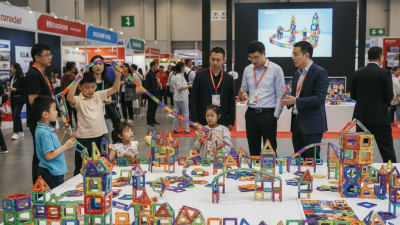

Why China Is a Leading Source of Magnetic Block Suppliers

China has become a leading source of magnetic block suppliers because its manufacturing network combines tooling, plastics, magnets, packaging, and logistics. The China Toy and Juvenile Products Association reported toy exports of approximately US$31.14 billion in 2023, despite a 7.6% year-on-year decline. The scale is measurable. It supports flexible production for private-label projects, small design changes, and different packaging requirements.

Demand also encourages supplier investment. Fortune Business Insights valued the global educational toys market at US$61.29 billion in 2023. Magnetic blocks fit this segment through spatial play, color recognition, and basic engineering concepts. However, product claims require care. A responsible buyer should verify magnet retention, plastic composition, pull-force consistency, and age grading through independent testing. Standards such as EN 71 and ASTM F963 may apply, depending on the destination market.

In factory evaluations, sample quality often looks stronger than mass production. That gap deserves attention. Buyers should review incoming-material records, mold-maintenance schedules, batch inspection results, and packaging drop tests. Clear communication helps, but it does not replace evidence. China offers deep technical capacity, yet supplier quality remains uneven. A carefully documented audit is still necessary, even when the quotation looks excellent.

Why China Is a Leading Source of Magnetic Block Suppliers

China’s large rare-earth mining output provides strong access to key materials used in permanent magnets, including neodymium, praseodymium, and other rare-earth elements. This established raw-material base supports efficient production of magnetic blocks and related components. Data source: U.S. Geological Survey, Mineral Commodity Summaries 2024; estimated 2023 mine production, measured in metric tons of rare-earth-oxide equivalent.

Key Criteria for Evaluating China’s Top Magnetic Block Manufacturers

When evaluating China’s top magnetic block manufacturers, start with product evidence, not polished catalogs. Ask for material specifications, magnet grade, coating type, and dimensional tolerances. A reliable factory should provide batch records and test reports from recognized laboratories. Inspect samples under normal classroom use. Check loose joints, chipped edges, uneven coatings, and weak attraction. Small defects become obvious after repeated building.

Manufacturing experience matters, but years alone prove little. Request a factory video or conduct an on-site audit when practical. Review incoming-material checks, magnet insertion controls, assembly stations, and final inspections. Ask how workers separate rejected pieces. The answer should be specific. Vague promises deserve caution. Also examine child-safety design, accessible warnings, packaging strength, and traceability. Products for children require age guidance and testing aligned with applicable destination-market standards. Do not overstate compliance without current documents.

A professional supplier should discuss customization without hiding its limits. Confirm mold ownership, color consistency, sample approval, production capacity, and realistic lead times. Compare quotations by material, testing, packaging, and defect allowances, not unit price alone. A low offer may exclude essential controls. I have seen attractive samples differ from mass production, so approve a sealed reference sample and inspect the first batch. Communication is part of quality. Evaluate response speed, technical clarity, corrective-action records, and support after delivery. No supplier is perfect; even a strong audit can miss seasonal changes in materials or staffing.

Leading Chinese Magnetic Block Suppliers and Their Product Strengths

China Top Magic Blocks Magnetic Suppliers?

Leading Chinese Magnetic Block Suppliers and Their Product Strengths

Chinese magnetic block suppliers serve educational, family, and professional construction toy markets. Their main strength is production flexibility. Many factories can adjust block shapes, magnet strength, colors, and packaging for different age groups.

In practical sourcing, product consistency matters more than a colorful catalog. Reliable suppliers usually control plastic molding, magnet insertion, polarity testing, and final assembly in separate stages. Buyers should request samples from several production batches. This reveals loose magnets, uneven edges, weak connections, or color variation. Small details matter.

Safety testing deserves close attention. Suppliers with stronger technical teams can provide material information, batch records, and test documentation for the target market. They may also support custom molds and lower-volume trial orders. However, not every supplier has the same quality depth. Some communicate well but struggle with stable production. That is a warning sign. Factory visits, third-party inspections, and clear acceptance standards reduce this risk.

Product design is another competitive advantage. Some Chinese manufacturers develop transparent blocks, curved pieces, wheels, panels, and storage systems. These additions help children build houses, vehicles, bridges, and abstract structures. Still, more pieces do not always create better play value. A balanced set needs strong connections, simple instructions, and durable surfaces. Suppliers that listen to user feedback often improve faster, although their first sample may still need revision.

How to Choose the Right Magnetic Blocks Supplier in China

China Top Magic Blocks Magnetic Suppliers?

Choosing the right magnetic blocks supplier in China requires more than comparing prices. Start by checking the factory’s production experience, material specifications, and quality control records. Ask for samples from regular production, not specially prepared pieces. A polished sample can mislead.

Inspect the blocks closely. Look for smooth edges, consistent magnet strength, secure magnet encapsulation, and accurate dimensions. Request test reports for material safety, mechanical strength, and applicable toy standards in your target market. Confirm whether testing covers the finished product, not only its raw materials. Ask how workers detect loose magnets during assembly. This small detail matters greatly.

Reliable suppliers should provide batch records, inspection photos, packaging details, and clear delivery terms. A factory audit can reveal storage conditions, calibration practices, and production capacity. Capacity claims deserve verification. Some suppliers outsource important steps without explaining it. That creates delays and inconsistent quality.

Communication is another practical test. Send the same technical questions to several suppliers and compare their answers. Professional teams usually discuss tolerances, mold changes, packaging risks, and corrective actions. Do not accept vague promises. However, perfect communication does not guarantee perfect production. Recheck samples after revisions, because improvements can introduce new defects. A long-term supplier should welcome documented feedback, reasonable audits, and independent inspection before shipment.

China Top Magic Blocks Magnetic Suppliers? - How to Choose the Right Magnetic Blocks Supplier in China
Evaluation Dimension Practical Benchmark Evidence to Request Priority
Magnet Material Neodymium magnets provide higher magnetic strength; ferrite magnets generally offer lower cost and better corrosion resistance. Material specification, magnetic grade, laboratory test report, and safety documentation. High
Magnetic Performance Surface flux density varies by material, grade, shape, and pole configuration. A defined target should be agreed before production. Flux-density measurements, pull-force results, test method, sampling plan, and acceptance limits. High
Block Dimensions and Tolerance Common molded or machined block tolerances are approximately ±0.10–0.30 mm, depending on material, size, and manufacturing process. Dimension drawings, first-article samples, inspection records, and calibrated measuring equipment details. High
Coating and Corrosion Protection Nickel-copper-nickel, epoxy, zinc, or polymer coatings may be used according to the magnet material and application environment. Coating thickness, adhesion testing, corrosion testing, surface-finish samples, and restricted-substance declarations. High
Child Safety Design For toy applications, magnets should be securely enclosed, resistant to detachment, and designed to comply with the destination market’s toy-safety requirements. Safety test reports, magnet-ingestion risk assessment, enclosure-strength test, age grading, and warning-label artwork. Critical
Regulatory Compliance Typical export requirements may include EN 71 for the European Union, ASTM F963 and CPSIA-related requirements for the United States, plus RoHS and REACH documentation where applicable. Current third-party test reports issued for the exact product, material, color, and construction. Critical
Quality Management A documented inspection system should cover incoming materials, in-process assembly, magnetic strength, appearance, dimensions, packaging, and final shipment checks. Quality manual, inspection checklist, defect classification, corrective-action records, and sample inspection report. High
Minimum Order Quantity Stock products may be available from small trial quantities; customized magnetic block sets commonly require approximately 100–1,000 sets or more. Written quotation showing MOQ by color, size, packaging format, and customization level. Medium
Sample and Prototype Support A reliable supplier should provide physical samples or prototypes before mass production, especially for magnetic alignment, fit, color, and safety validation. Sample invoice, prototype lead time, revision policy, sample approval form, and retained reference sample. High
Production Lead Time Typical stock orders may take about 7–15 days; customized tooling, colors, packaging, or assembly may require approximately 20–45 days after approval. Detailed production schedule, capacity confirmation, holiday schedule, and late-delivery compensation terms. High
Customization Capability Capabilities may include block dimensions, magnetic orientation, color, surface finish, assembly structure, logo-free packaging, instruction sheets, and private-label packaging. Technical drawings, tooling quotation, color samples, magnetic-pole diagram, and pre-production approval procedure. High
Packaging and Transit Protection Packaging should prevent scratching, demagnetization, loose-part movement, moisture exposure, and damage during normal international transport. Packaging specification, carton dimensions, drop-test results, inner-box design, palletization plan, and transport labeling. High
Export Documentation Commercial invoices, packing lists, shipping documents, product descriptions, country-of-origin information, and applicable compliance reports should be prepared accurately. Sample export document set, customs product description, HS-code support, and dangerous-goods or magnetized-material guidance where required. Medium
Commercial Terms Compare total landed cost rather than unit price alone, including tooling, testing, packaging, freight, duties, payment fees, and rework risk. Itemized quotation, Incoterms, payment schedule, tooling ownership terms, warranty policy, and replacement or refund conditions. High
Supplier Verification The supplier’s legal registration, manufacturing location, production capability, export experience, and product-specific testing should be independently verified before payment or mass production. Business license, factory audit, production photographs or video verification, customer references, and independent pre-shipment inspection. Critical
Selection note: The benchmarks above are indicative purchasing ranges and verification points for magnetic block projects. Final specifications, testing requirements, lead times, and costs should be confirmed in a signed quotation and approved sample.