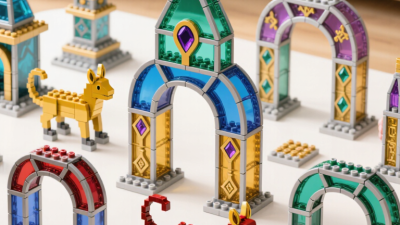
How to Choose Square Magnetic Blocks in 2026?
Choosing Square Magnetic Blocks in 2026 requires more than comparing colors, piece counts, or online ratings. The right set should match a child’s age, building goals, and daily play environment. Market outlooks from Grand View Research and Fortune Business Insights identify construction toys as a continuing growth category, although their market definitions differ. That limitation matters. Forecasts can suggest direction, but they cannot prove that one block set is safer or more durable.
Safety deserves closer attention. The U.S. Consumer Product Safety Commission continues to warn families about swallowed high-powered magnets and related injuries. Check whether each magnet is fully enclosed, firmly bonded, and difficult to access after repeated drops. Look for clear age guidance, traceable manufacturer information, and testing references such as ASTM F963 or EN 71, where relevant to your market. Certification is useful evidence, not a magic guarantee.
Material choice also affects experience. ABS plastic usually feels rigid and produces crisp corners. Softer materials may reduce impact noise, but they can scratch or deform sooner. A strong magnetic connection helps towers stand, yet excessive force can frustrate younger builders. Try a simple test: build a six-block wall, shake the table gently, and inspect every seam. Small details reveal quality.
This guide compares magnet strength, shell design, tolerances, durability, educational value, and storage. It also considers independent reviews and manufacturer disclosures. No buying guide is perfect. Product specifications can change, and some reviews lack long-term testing. Choose carefully, then observe how the blocks perform in real hands, on real floors, over real months.
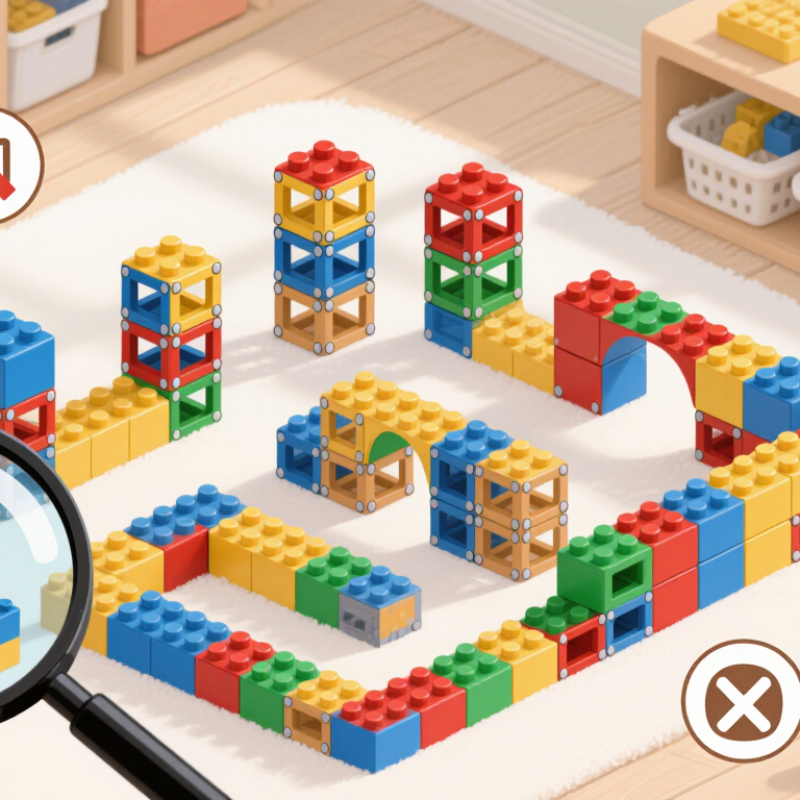
What Square Magnetic Blocks Are and How They Work
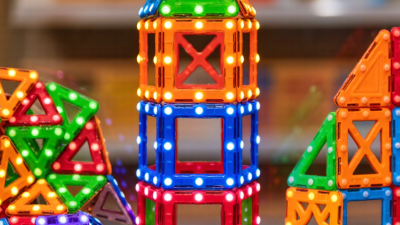
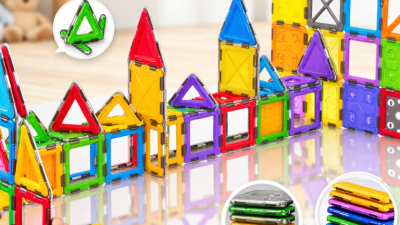
Square magnetic blocks are flat, square construction pieces with small magnets sealed inside their edges. The magnets attract across matching sides, allowing pieces to join without clips or screws. A child can build a floor, fold it upward, and create a cube within minutes. Some sets also include triangles or windows, but the square remains the basic unit. The shape is simple. The learning is not.
When two edges meet, magnetic force holds the tiles together while the plastic faces spread the load. A larger structure works like a flexible shell, not a rigid brick wall. It may lean, twist, or collapse when the base is narrow. That behavior teaches balance, symmetry, and spatial reasoning through direct feedback. From a practical viewpoint, strong connection matters, but magnet strength alone is not enough. Evenly sealed edges, smooth surfaces, and clear assembly guidance affect daily use.
For choosing square magnetic blocks in 2026, check the age range, magnet security, material information, and independent safety testing. Avoid pieces with cracks, loose panels, or exposed magnets. Inspect them often. A swallowed magnet can cause severe internal injury, requiring urgent medical attention. I would also compare tile size with the child’s hands and storage space. Bigger squares are easier for young builders, while thinner pieces pack efficiently but may feel less stable. Bright colors improve sorting, yet color alone does not prove quality. A careful choice balances play value, construction performance, and dependable safety evidence.
Key Features to Compare When Choosing Square Magnetic Blocks
How to Choose Square Magnetic Blocks in 2026?
When comparing square magnetic blocks, inspect magnet strength, enclosure, dimensions, and edge finishing. Strong attraction helps structures stay upright, but excessive force can frustrate younger builders. Each magnet should remain fully sealed inside the plastic.
The U.S. Consumer Product Safety Commission reported about 2,400 magnet-ingestion injuries treated in emergency departments from 2010 to 2021. This figure makes magnet containment a non-negotiable feature, not a minor detail. Check safety documentation against ASTM F963-23 and applicable local toy standards. Certification alone is not enough. Read the test scope.
Material thickness also matters. Press each corner gently and watch for flexing, cracks, or sharp seams. Square blocks should connect evenly, without visible gaps around the panels. Transparent surfaces are useful for color mixing and internal inspection, but they may show scratches sooner. Solid panels often hide wear. That trade-off deserves attention.
A useful set should include enough squares for walls, floors, and repeated patterns. Too few pieces limit learning quickly.
Consider magnetic polarity, connector consistency, and cleaning practicality. In classroom-style testing, blocks that connect from several orientations support faster construction and fewer interruptions. Pieces with rounded edges feel safer during long play sessions. Avoid judging quality by magnet strength alone.
I once preferred stronger connectors, but they made small structures harder to separate. That was a useful mistake.
Finally, review age guidance, warning labels, drop-test information, and replacement availability. Independent testing records are more convincing than colorful packaging or vague “educational” claims.
How to Match Block Sets With Age, Skills, and Building Goals
Square magnetic blocks should match a child’s age, hand control, and building purpose. For ages three to five, choose larger pieces with rounded edges and simple shapes. They support stacking, sorting, and basic balance. Avoid sets with tiny accessories, especially around younger children. Always check the manufacturer’s age guidance and inspect magnets after drops. One loose magnet changes the safety calculation.
For ages six to eight, medium-sized blocks can introduce symmetry, walls, bridges, and simple structures. Children at this stage often need enough pieces to revise failed designs. For older children, stronger connections and triangles can support towers, vehicles, and geometric models. The World Economic Forum’s Future of Jobs Report 2023 surveyed 803 companies across 45 economies. It ranked analytical thinking as the leading core skill. A set that encourages testing and redesign supports that direction better than one offering only decorative pieces.
Match the set to the building goal. Choose varied squares and connectors for open-ended invention. Select more geometric shapes for patterns, spatial reasoning, and classroom challenges. A 2024 OECD report on creative thinking also emphasizes generating, evaluating, and improving ideas. That makes rebuilding valuable, not merely frustrating. In practice, adults should ask, “What made it fall?” rather than fixing it immediately. My own judgment is imperfect: more pieces do not automatically create better play. Storage, child interest, and a reachable building surface may matter just as much. Keep the first project small. Four walls and a roof are enough.
Safety Standards, Materials, and Magnet Strength to Check
Choosing square magnetic blocks in 2026 requires more than checking their color or advertised pull force. Start with safety documentation. The U.S. Consumer Product Safety Commission reported about 2,400 emergency-room treatments for magnet ingestion between 2017 and 2021. That figure makes loose or exposed magnets a serious design concern. Check compliance with ASTM F963-23, 16 CFR Part 1262, or ISO 8124-1, depending on the market. Certification should cover the finished block, not only the raw magnet.
Material quality matters under daily handling. Look for impact-resistant ABS or nylon housings, securely sealed seams, and coatings that resist peeling. Nickel-plated magnets may corrode after scratches expose the surface. A simple test helps: inspect corners after repeated drops, then check whether the magnet shifts inside. Not scientific enough. It still reveals weak construction. Avoid blocks with sharp edges, rattling parts, or visible gaps around the magnetic insert.
Magnet strength should be measured, not guessed from attractive packaging. Ask for surface flux data, pull-force testing, and batch consistency records. Stronger is not automatically safer or better. Excessive attraction can pinch fingers and make separation difficult for young users. The CPSC magnet report also shows why small, high-strength components deserve extra scrutiny. Test several blocks, not one sample. A single impressive piece can hide uneven production quality.
How to Choose Square Magnetic Blocks in 2026?
Compare common permanent-magnet materials by typical remanent flux density. Higher remanence can indicate greater magnetic potential, but actual holding force also depends on block size, pole design, air gap, coating, and assembly quality.
Safety checks: Confirm that the finished blocks pass the applicable toy-safety requirements, including small-parts testing under standards such as ASTM F963 and EN 71-1. Fully contain magnets so they cannot become accessible after foreseeable impact, compression, torsion, or bending tests. Check for secure bonding, rounded edges, durable coatings, and clear age warnings. The values shown are representative material-level figures, not a certification or a guarantee of finished-product performance.
How to Evaluate Set Size, Compatibility, Price, and Long-Term Value
Choosing square magnetic blocks in 2026 requires more than counting pieces. A large set may look impressive, yet unused shapes can crowd a shelf. Check the number of squares, triangles, windows, wheels, and connectors. For younger children, 40 to 60 pieces often support simple houses and towers. Older builders may need 100 or more for wider structures. My practical test is simple: build a stable model, then rebuild it tomorrow. If the set feels limited, its size is misleading. Small details matter.
Compatibility deserves careful attention. Similar-looking magnets do not always connect securely. Compare edge length, magnet placement, polarity, and connector thickness before mixing sets. A loose joint can make a bridge collapse with one gentle touch. Read technical specifications, not only product photos. Materials should feel smooth, and magnets should remain enclosed after repeated use. Claims are not proof. Inspect return terms and safety information from reliable sellers.
Tips: Calculate price per usable piece, not price per box. A 60-piece set with strong connectors may outperform a 120-piece set with weak geometry. Check storage space, replacement availability, and cleaning instructions. Consider whether the pieces support open-ended building or only fixed cards. I once valued quantity too highly. That was a costly lesson. Long-term value comes from durability, compatibility, and continued creative use, not a dramatic first impression.
How to Choose Square Magnetic Blocks in 2026? - How to Evaluate Set Size, Compatibility, Price, and Long-Term Value
| Set Profile |
Recommended Age |
Piece Count |
Typical Square Tile Size |
Basic Shapes Included |
Typical Price Range (USD) |
Compatibility Check |
Estimated Cost per Piece |
Long-Term Value |
| Starter Set |
3+ years |
20– thirty pieces |
About 7.5–8 cm square |
Squares and triangles |
$15–$30 |
Best with sets using the same tile dimensions and exposed edge magnets |
$0.75–$1.50 |
Good for testing interest; limited construction range |
| Small Creative Set |
3+ years |
40–60 pieces |
About 7.5–8 cm square |
Squares, triangles, and windows |
$30–$55 |
Usually compatible with sets sharing the same geometry; confirm magnet polarity |
$0.50–$1.38 |
Good balance for individual play and simple models |
| Core Family Set |
3+ years |
80–100 pieces |
About 7.5–8 cm square |
Squares, triangles, rectangles, and windows |
$55–$95 |
Strong compatibility potential when edge length, magnet placement, and polarity match |
$0.55–$1.19 |
Best all-round option for repeated family use |
| Large Construction Set |
3+ years |
120–150 pieces |
About 7.5–8 cm square |
Full basic assortment plus arches, wheels, or specialty pieces |
$85–$145 |
Check whether specialty parts use the same connection system as standard tiles |
$0.57–$1.21 |
High play value for multiple children and larger structures |
| Expansion or Refill Set |
3+ years |
30–60 pieces |
Must match the existing set |
Often duplicates of high-use shapes or specialty parts |
$20–$65 |
Measure tile edges and compare magnet orientation before purchasing |
$0.40–$2.17 |
Excellent when it replaces lost pieces or fills a specific gap |
| Classroom or Group Set |
3+ years |
200+ pieces |
About 7.5–8 cm square |
Broad assortment with storage and activity-oriented pieces |
$140–$300+ |
Prioritize consistent dimensions, secure magnet enclosures, and replacement availability |
$0.70–$1.50+ |
Highest capacity; value depends on durability and loss control |
Evaluation notes:
Prices are typical 2026 consumer-market estimates in U.S. dollars before tax and discounts. Compatibility depends on matching tile dimensions, edge geometry, magnet placement, and magnet polarity; similar-looking square tiles are not automatically interchangeable. For long-term value, also check enclosed magnets, smooth sealed edges, safety labeling, storage quality, cleaning instructions, and the availability of replacement pieces.