Inquiry
Form loading...

How to Choose Light Up Magnetic Blocks?

Choosing Light Up Magnetic Blocks requires more than comparing colors, prices, and glowing effects. These toys combine construction, electronics, magnets, and early learning. Each part deserves separate attention. Circana’s recent U.S. toy-market tracking identifies building sets as a major toy category. This suggests strong demand for hands-on construction play. However, popularity does not prove quality.

Safety must guide every decision. The U.S. Consumer Product Safety Commission reported approximately 231,000 toy-related emergency-department injuries among children under 14 in 2023. Its guidance also highlights the serious risks associated with loose or high-powered magnets. Therefore, examine magnetic strength, enclosure design, battery access, and connector durability. Check whether the product references ASTM F963, EN 71, or other applicable testing requirements. A bright shell can distract from a weak connector.

Learning value matters, too. Research from the LEGO Foundation and UNICEF emphasizes playful learning, creativity, problem-solving, and collaboration. Good Light Up Magnetic Blocks should support these behaviors without forcing a single building method. Look for varied shapes, stable connections, clear color contrast, and lights that enhance play rather than overwhelm it. Battery life also matters during real use. Parents should inspect heat, charging reliability, and cleaning requirements. A product may look excellent online but feel fragile in small hands. That happens. This guide evaluates materials, safety evidence, age suitability, lighting performance, educational value, and long-term usability. No single rating can answer everything. Careful comparison remains necessary.
How to Choose Light Up Magnetic Blocks?

What Are Light-Up Magnetic Blocks and How Do They Work?

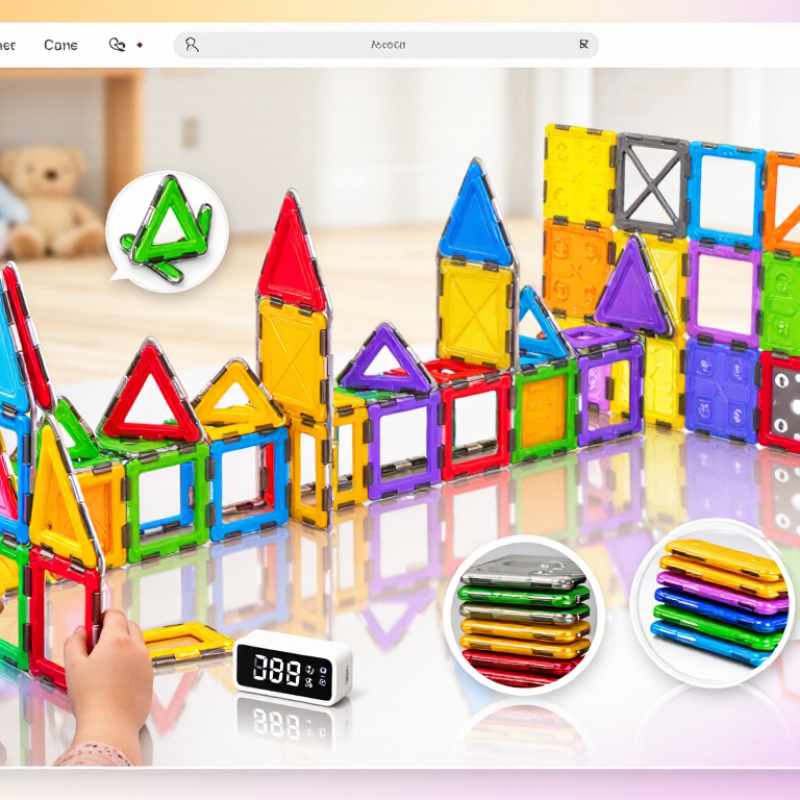
Light-up magnetic blocks are construction pieces with magnets inside their edges and small LED circuits inside their bodies. When two pieces connect, magnetic force holds them together. In some designs, metal contacts complete the circuit and activate the lights. Other designs use pressure switches, motion sensors, or built-in batteries. The result is a glowing tower, window, vehicle, or geometric shape.

The light usually comes from low-voltage LEDs, which produce little heat during normal use. Still, check the battery compartment and charging instructions carefully. Loose batteries can be dangerous, especially around young children. Choose blocks with sealed components, strong connections, smooth edges, and clear age guidance. A reliable product should also provide material information and recognized safety testing details.

I once assumed brighter lights meant better blocks. That was not entirely right. Very bright pieces may distract children or hide weak construction quality. Test a few connections before buying a large set. The magnets should hold firmly but separate without excessive force. Watch for flickering lights, exposed contacts, or parts that become warm. Those signs deserve attention. Consider the child’s actual play habits, too. A creative builder may need many shapes, while a younger child may benefit from larger pieces and simpler lighting controls. Even well-designed blocks can fail after rough handling, so inspect them regularly.
Which Features Matter When Choosing Light-Up Magnetic Blocks?

How to Choose Light Up Magnetic Blocks?

Which Features Matter When Choosing Light-Up Magnetic Blocks?

Light quality matters more than brightness. Choose blocks with diffused LEDs, so the light spreads softly across each panel. Flickering or harsh blue light can quickly become tiring during evening play. The American Academy of Pediatrics recommends avoiding distracting media features during family activities, so lighting should support construction, not dominate it. Simple color changes and steady illumination are usually enough.

Magnet safety deserves closer attention. The U.S. Consumer Product Safety Commission estimated 231,000 toy-related emergency-room injuries among children under 15 in 2023. Check sealed magnetic units, secure edges, and a battery compartment requiring a tool. ASTM F963-23 also emphasizes limits for accessible magnets and small parts. Inspect every piece after drops. A cracked shell is not a minor defect.

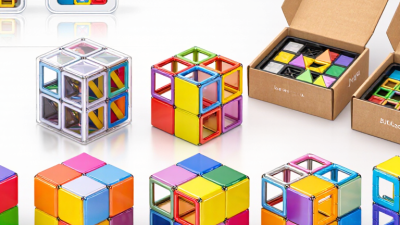
Connection strength affects the building experience. Blocks should hold a small tower but separate without force. Uneven polarity creates frustration. I once preferred the strongest magnetic connection, but that choice made taller models collapse during adjustment. Balanced resistance works better. Look for rounded corners, readable age guidance, and clearly tested battery performance. Replaceable batteries can reduce waste, although they may be easier for children to access. That trade-off needs honest checking.

How to Match Block Types With Age, Skills, and Play Goals

How to Choose Light Up Magnetic Blocks?

Match the block type to the child, not only the lighting effect. For ages three to four, select large, lightweight pieces with simple magnetic connections. Avoid loose batteries and tiny components. Children need safe building practice before complex designs.

For ages five to seven, add triangles, squares, translucent panels, and stable magnetic joints. These features support symmetry, balance, and early geometry.

The 2022 Play Well Study reported that 96% of parents view play as essential to learning. Light can make that learning visible.

Older children may enjoy blocks with stronger magnets, varied shapes, and simple electrical components. Their goal might be a glowing bridge, vehicle, or room model. Check whether the light unit has a secured battery compartment. Magnets should remain fully enclosed.

The American Academy of Pediatrics links active play with problem-solving and executive-function development. Still, more parts do not always create better play. I have seen children lose interest when a set offers too many difficult connections.

Tips:

Choose one clear play goal. For younger children, build a tower and name its shapes. For developing builders, ask them to repair a leaning wall. For advanced users, suggest a light path or moving structure. Observe frustration carefully. A slightly easier set may build confidence faster. Age labels matter, but individual skills matter more.

What Safety Standards and Materials Should You Check?

When choosing light up magnetic blocks, inspect safety evidence before colors or patterns. Check whether the product meets recognized standards in your market, such as ASTM F963, EN 71, or applicable chemical and electrical requirements. A compliance mark alone is not enough. Ask for recent third-party test reports, product age guidance, and traceable manufacturer information.

Magnets need special attention. They should be fully sealed inside durable plastic, with no loose pieces after drop, twist, or pull tests. Strong magnets can cause serious internal harm if swallowed, especially when more than one is ingested. Look for secure battery compartments, preferably closed with screws. LEDs should remain cool during normal play. The blocks should have smooth edges, stable connections, and no brittle coating that flakes under pressure. Common materials include ABS or similar impact-resistant plastics. Check for testing related to lead, phthalates, BPA, and other restricted substances. I have learned that attractive packaging proves very little.

Tips: Press every seam gently. Reject cracked blocks. Check the battery cover. Read the smallest warning label. Avoid products with unclear testing records, vague age ranges, or magnets that rattle inside. Adult supervision still matters, even when the set appears well made. Some failures only appear after repeated use, so inspect the blocks again after several play sessions.

How to Choose Light Up Magnetic Blocks? - What Safety Standards and Materials Should You Check?

Safety or Material Dimension What to Check Evidence or Typical Requirement Warning Signs
Age grading and small parts Confirm the recommended age matches the child’s ability and whether detached pieces can fit completely inside the applicable small-parts cylinder. Products intended for children under 3 require especially careful small-parts evaluation. Age grading should be supported by a documented safety assessment. A product marketed to toddlers contains detachable tiles, caps, batteries, or magnetic parts that can be swallowed.
Magnet strength and retention Check whether every magnet is permanently enclosed and remains secured after impact, torque, tension, compression, and repeated-use testing. For the United States, review the applicable magnet requirements in 16 CFR Part 1262 and the magnet provisions of ASTM F963. The EU and other markets may apply equivalent toy-safety requirements. Magnets can be seen, moved, removed with fingernails, or exposed after bending, cracking, or impact.
Multiple-magnet ingestion risk Treat loose or separable high-powered magnets as a serious hazard because swallowed magnets may attract each other through intestinal tissue. Choose designs that prevent magnet separation and provide clear warnings, disposal guidance, and medical advice if a magnet may have been swallowed. Small, high-flux magnets are accessible or the instructions do not address ingestion emergencies.
Plastic enclosure material Ask for the polymer type, colorant information, and test results for mechanical and chemical safety. Common rigid plastics include ABS or polycarbonate. The material should resist cracking, sharp edges, saliva, sweat, and expected temperature changes. Brittle plastic, strong solvent odor, sharp flash, peeling coatings, or no material disclosure.
Edges, corners, and surface finish Inspect every corner, seam, connector, and transparent panel for cutting, pinching, or puncture hazards. Accessible edges should be rounded or otherwise protected, and decorative coatings should resist flaking under normal use. Sharp molding lines, cracked panels, exposed metal, loose film, or accessible pinch points.
LED light safety Verify that the light source is enclosed, stable, and not excessively bright or focused when viewed during normal play. Prefer diffused LEDs with no accessible hot surfaces, exposed wires, or easily removable light modules. Check for compliance with the electrical and photobiological requirements applicable to the target market. Direct high-intensity flashing, exposed LED leads, overheating, flicker that causes discomfort, or a light module that can be pulled out.
Button or coin-cell batteries Check that the battery compartment requires a tool or two independent movements to open and that the closure remains secure after drop testing. Button and coin cells can cause severe internal chemical injury if swallowed. Packaging and instructions should include the required battery-ingestion warning for the sales market. A battery door opens by hand, a cell is accessible, there is no warning, or the compartment relies only on a weak snap fit.
Wiring and electrical insulation Inspect solder joints, wire routing, insulation, and strain relief, especially near hinges and removable panels. Low-voltage battery circuits should not expose conductors or create accessible sharp metal parts. Electrical toy requirements may include IEC 62115 or the applicable national equivalent. Loose wires, crushed insulation, exposed solder, overheating, or intermittent operation after movement.
Chemical safety Request testing for restricted elements, plasticizers, and other substances regulated in the destination market. Relevant frameworks may include CPSIA requirements in the United States, EN 71-3 for migration of certain elements in the EU, and REACH restrictions for applicable substances. No laboratory report, unusually strong odor, oily surface, color transfer, or non-compliant paint and coating claims.
Recognized toy-safety standard Identify the exact standard edition and confirm that the report covers the finished light-up magnetic block, not only its raw materials. Common references include ASTM F963 for the United States, EN 71 for the European market, and ISO 8124 for international toy-safety testing. A generic “CE,” “non-toxic,” or “safety tested” statement without a test report, product model, date, and laboratory details.
Mechanical durability Check drop, impact, pull, torque, compression, seam, and repeated-assembly performance. After testing, there should be no hazardous breakage, accessible magnet, loose battery, sharp edge, or detached small part. Tiles separate during ordinary building, connectors snap easily, or internal components rattle after a short drop.
Cleaning and moisture resistance Follow the stated cleaning method and determine whether liquid can reach magnets, batteries, LEDs, or circuit boards. Unless specifically rated otherwise, electronic magnetic blocks should not be immersed. Surfaces should be cleanable without damaging coatings or seals. No cleaning instructions, open battery cavity, water trapped inside, corrosion, or electronic malfunction after light splashes.
Instructions, labels, and traceability Look for age information, battery type, magnet and battery warnings, disposal guidance, manufacturer or importer contact details, and a batch or model identifier. Clear instructions support safe use, supervision, inspection, and recall traceability. Warnings should be visible, understandable, and appropriate for the destination market. Missing instructions, unreadable labels, no model or batch code, or warnings hidden only inside the package.

Always verify the latest legal requirements in the intended sales market and request a current, product-specific test report from a competent laboratory.

How to Compare Sets, Accessories, Prices, and Long-Term Value

Choosing light-up magnetic blocks requires more than counting pieces. Compare the set’s connector strength, light modes, block shapes, and battery access. A larger box may contain repeated squares, while a smaller set offers ramps, windows, and wheels. Ask what a child can build after the novelty fades. That matters.

Accessories should extend play, not merely decorate it. Look for compatible panels, base plates, storage trays, and replacement magnets. The U.S. Consumer Product Safety Commission reported an estimated 231,700 toy-related emergency-department injuries among children under 15 in 2023. Check age guidance, magnet housing, battery compartments, and loose components carefully. A bright light is useless if inspection becomes difficult. Safety deserves more attention than packaging.

Price comparisons should use cost per usable piece and estimated play hours. For example, a $60 set used weekly for two years costs about $0.58 per session. That estimate is imperfect. Children do not play consistently. Still, it exposes misleading “piece count” value. The Toy Association’s 2024 industry outlook identified construction play as a continuing category of interest, but popularity does not guarantee durability. Read independent testing, warranty terms, and replacement-part policies. Compare magnetic alignment after repeated builds, not only on day one. A slightly expensive set may offer better long-term value when accessories remain compatible and lights are replaceable.