Inquiry
Form loading...

Why Do Buyers Choose Magnetic Magic Blocks?

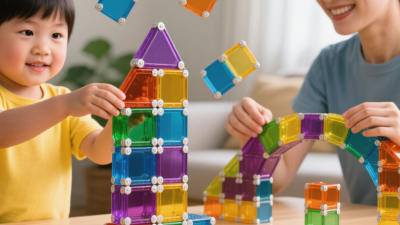
Why do buyers choose magnetic magic blocks when shelves are full of toys? The appeal often starts with a simple click. A child joins two colorful tiles, adds a triangle, and watches a small house take shape. Magic Blocks Magnetic sets can make building feel immediate, without instructions or complicated parts. That ease matters during short play sessions at home, in classrooms, or on a rainy afternoon. Small pieces, big ideas.

The value is not only in the first build. Children can take apart a tower and try again, exploring balance, shapes, and basic design through hands-on play. Parents may also appreciate that many sets store neatly and work for both solo projects and shared creations. Still, buyers should look beyond bright packaging. Tile strength, smooth edges, clear age guidance, and storage options can affect everyday use. Magnetic connections may vary, and a set that feels sturdy in one build may frustrate a child in another. Check the maker’s care and supervision guidance, especially for younger children. No toy suits every family, and open-ended play can sometimes become a pile of pieces on the floor. A closer look at price, build quality, and the child’s interests helps explain why some buyers choose these blocks—and why others keep comparing.
Why Do Buyers Choose Magnetic Magic Blocks?

What Magnetic Magic Blocks Are

Magnetic magic blocks are construction toys made from colorful plastic or wooden shapes with enclosed magnets along their edges. The magnets let pieces connect without clips or complicated instructions. A child can press two squares together, add a triangle, and make a small roof in seconds. The set may include squares, triangles, windows, or curved pieces. Unlike ordinary blocks, these pieces can join side-to-side and sometimes stand upright, making flat patterns and three-dimensional structures. They are not all alike: magnet strength, piece size, and connector design vary. That difference matters more than the packaging suggests.

Circana’s 2023 U.S. toy industry report recorded $28.3 billion in sales, an 8% decline from 2022. This broad market figure does not prove that magnetic blocks are better or more educational. It does show why buyers may compare toys carefully. Look for clear age guidance, securely enclosed magnets, and instructions for checking pieces for cracks or damage. Small loose magnets can be dangerous if swallowed, so damaged pieces should be removed promptly.

Tips: Start with a simple bridge or box. Let children test why one shape holds and another tilts. Check every piece after play. Honestly, adults may need to resist fixing each wobbly structure; the uneven attempts are part of the learning.

How Magnetic Connections Enable Construction

Why Do Buyers Choose Magnetic Magic Blocks?

How Magnetic Connections Enable Construction

Magnetic connections turn a small movement into a sturdy-looking structure. Bring two block edges together, and hidden magnets pull them into place. The click is satisfying. Children can build a low wall, lift it, then reshape it without searching for tiny fasteners. Unlike glue, the connection stays reversible. That makes experimentation quick.

The connection depends on more than magnet strength. Clean, aligned faces usually hold better than tilted ones, while a small gap can weaken attraction. Triangles and short, wide bases often help builds resist wobbling. Still, magnets cannot replace thoughtful design. A tall tower may lean, even when every joint feels secure. Circana reported U.S. toy sales of $28.3 billion in 2023; this shows the industry’s scale, not proof that magnetic blocks outperform other toys.

Tips: Start with a broad base and add one layer at a time. Test a bridge gently before placing anything on it. If a joint slips, check its alignment and reduce the overhang. It is easy to blame the magnet; sometimes the shape is the real problem.

Play, Learning, and Creative Uses

Magnetic magic blocks turn a kitchen table into a small design lab. A child can build a tall tower, watch it lean, then widen the base and try again. The first tower often falls. That can be frustrating, but it gives children a reason to test another idea.

Common Sense Media’s 2021 Census reported that U.S. children aged 8–12 averaged 5 hours and 33 minutes of daily entertainment screen media; teens averaged 8 hours and 39 minutes. These figures are not a case against screens. They do show why hands-on play can be a useful option.

Play can also invite learning without turning the activity into a lesson. Ask a child to predict which bridge will hold a toy car, count the pieces used, or describe a pattern. The American Academy of Pediatrics’ 2018 clinical report links play with developing language, social skills, and executive function. That does not mean magnetic blocks guarantee those outcomes; children differ, and adult instructions can sometimes take over.

Let them lead. A quiet child may prefer building alone, while siblings might negotiate a shared space station. Keep the pieces age-appropriate, and check them for damage before play.

Safety, Durability, and Compatibility Factors

Buyers often look past bright colors and ask how securely each magnet sits inside its plastic casing. A smooth, closed edge matters because loose magnets can be dangerous if a child swallows them. Check the recommended age range, inspect seams for gaps, and supervise younger children during play. Small parts need attention. Even sturdy-looking blocks can crack after repeated drops or hard twisting.

Durability shows up in ordinary use: a tower gets bumped, pieces are pulled apart, and corners meet the floor. Look for consistent molding, firm connections, and surfaces without sharp edges. After rough play, check for cracks, rattling, or warped panels. Replace damaged pieces rather than relying on tape or glue. That may feel fussy, but a quick check is easier than guessing whether a hidden magnet is still secure.

Compatibility is less predictable than product photos suggest. Blocks may share a similar shape yet differ in size, magnetic strength, or polarity. Try joining one piece from each set gently before building a large structure. A weak connection can make a tall model wobble. Some mismatch is normal, and I would not assume every set will work together. Confirming dimensions and return terms before buying can prevent a box of nearly compatible pieces.

Key Reasons Buyers Choose Magnetic Magic Blocks

Buyers often choose Magnetic Magic Blocks because they turn a small idea into something children can touch, test, and rebuild. The pieces click together with a clear snap, making bridges, towers, and bright window patterns feel rewarding. No single model is required. That flexibility can keep play fresh, while giving adults an easy way to join in with counting, color matching, or simple design challenges.

The American Academy of Pediatrics’ 2018 clinical report, “The Power of Play,” describes play as supporting children’s cognitive, social, and emotional development. That is useful context, not proof that one toy guarantees learning. Circana reported U.S. toy sales of $28.3 billion in 2023, down 8% from 2022; market figures show the scale of toy spending, but cannot explain each buyer’s choice. Buyers may also value tidy storage and pieces that work across different builds. A cracked piece, though, can change the experience quickly.

Tips: Check the maker’s age guidance, inspect pieces for damage, and store blocks away from very young children. Try one simple bridge challenge before adding more pieces. That keeps play manageable.

Why Do Buyers Choose Magnetic Magic Blocks? — Key Reasons Buyers Choose Magnetic Magic Blocks
Buyer Consideration Why It Matters What to Check Before Buying Typical Benefit Priority
Open-ended creativity Pieces can be rearranged into different flat patterns and three-dimensional structures, allowing children to experiment rather than follow only one fixed build. Look for a range of shapes and colors, and check whether the set includes examples or building ideas suitable for the intended age group. Supports imaginative construction and repeated play with different designs. High
Hands-on learning Building lets children explore shape, balance, symmetry, and basic spatial relationships through direct manipulation. Choose pieces that connect and separate easily enough for the child using them; adult guidance may be helpful for younger children. Combines play with practical opportunities to explore early STEM concepts. High
Quick magnetic connections Magnetic edges can make it easier to join pieces and revise a design compared with construction toys that require more involved fastening. Check that the pieces connect reliably in the configurations shown and that the product instructions explain safe handling. Encourages rapid building, rebuilding, and experimentation. High
Shared play Building projects can give children and adults a common activity and create opportunities to plan, describe, and solve problems together. Consider the number of pieces and whether the set can support the number of children expected to play with it. Can encourage cooperation, turn-taking, and conversation during play. Medium
Range of building possibilities A varied selection of shapes can provide more options for making patterns, enclosures, towers, and other structures. Review the piece count and shape assortment rather than relying on the set size alone; check whether expansion sets are compatible if needed. Offers flexibility as building ideas become more complex. Medium
Ease of storage and cleanup Loose pieces are easier to manage when they can be gathered and stored in a suitable container after play. Check whether storage is included and whether the container can hold all pieces without forcing or damaging them. Makes cleanup and keeping track of pieces more manageable. Medium
Age suitability and safety Small parts and magnets can pose serious hazards if swallowed, so age guidance and supervision are important, especially around young children. Follow the stated age grading and warnings. Inspect pieces for damage, and keep any broken or loose components away from children. Helps buyers select a set that better fits the user and play environment. Essential
Durability and ongoing value Construction toys are handled repeatedly, so buyers often consider whether pieces appear sturdy and are likely to remain usable with regular play. Review product details and care instructions; examine seams, edges, and connections when the set is received. A well-maintained set can be used for many different building sessions. Medium