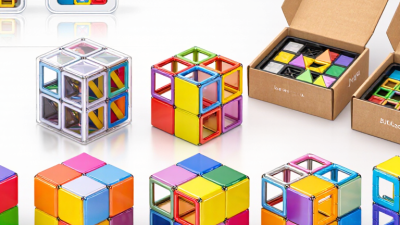
Global buyers are looking beyond bright colors and quick sales. They want toys that support meaningful play, consistent quality, and responsible sourcing. Magic Magnetic Blocks answer this demand through simple construction, strong visual appeal, and open-ended creativity. A child can build a bridge, a house, or an uneven tower within minutes. That hands-on experience makes the product easy to understand across different cultures and age groups.
Dr. Amanda Gummer, founder of the Good Play Guide, has said, “Play is not a luxury; it is a necessity.” This idea helps explain the growing interest in magnetic construction toys. Magic Magnetic Blocks can encourage spatial thinking, problem-solving, and cooperative play without requiring screens. Parents may notice children testing balance, changing shapes, and trying again after a collapse. Small details matter. Smooth edges, secure connections, clear age guidance, and reliable packaging influence buyer confidence.
For international purchasers, product consistency is equally important. They often examine magnet safety, material quality, factory controls, documentation, and after-sales support. These factors can affect retail returns and long-term trust. However, no product should be treated as perfect. Magnetic strength can vary, packaging may suffer during transport, and local requirements differ between markets. Careful buyers should request current test reports and sample products before placing larger orders.
That caution is valuable.
Choosing Magic Magnetic Blocks is not only a design decision. It is a practical evaluation of safety, play value, supply reliability, and customer expectations. When suppliers communicate clearly, global buyers can build stronger partnerships and offer children a more engaging way to learn through play.
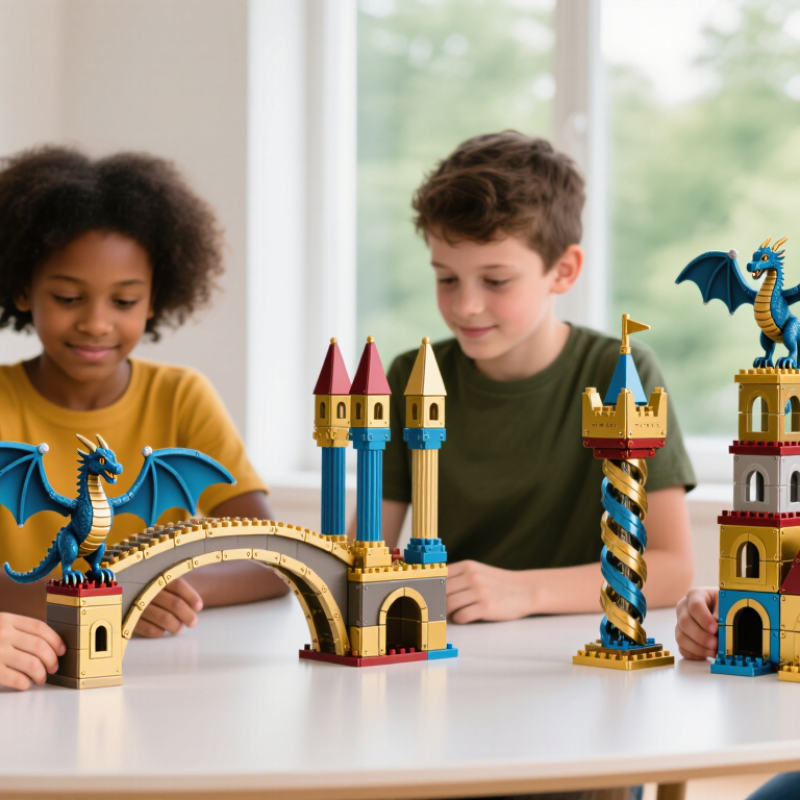
Magic magnetic blocks are construction pieces with small magnets sealed inside their edges. Children connect them by bringing two sides close together. Magnetic force pulls compatible sides into alignment, while the shapes create walls, arches, vehicles, and simple geometric forms. Some sets use square tiles, while others include triangles, windows, or rods. Designs change quickly.
The magnets are usually arranged with matching polarities on selected edges. This allows pieces to attract, turn, and connect from different angles. In hands-on use, a stronger connection makes taller structures more stable.
However, too much magnetic strength can make separation difficult for small children. The plastic shape also matters. Thin edges may bend, and uneven surfaces can leave visible gaps.
For global buyers, practical inspection should cover magnet sealing, material quality, edge smoothness, packaging, and age guidance. Request current safety test documents for each target market, because requirements can differ. Check samples after repeated opening, dropping, and rebuilding.
No construction toy is indestructible. That is easy to forget. If a tile cracks or a magnet becomes loose, it should leave use immediately. Clear instructions should also warn caregivers about damaged parts and age-inappropriate play.
Magnetic blocks appeal to global buyers because one set supports many play patterns. Children can build towers, vehicles, bridges, and simple geometric shapes. The magnetic connection gives immediate feedback when pieces meet. This makes construction feel practical, not abstract. The global educational toys market was valued at about USD 62.2 billion in 2023, according to Grand View Research. That growth reflects demand for products linking play with learning. WEF’s Future of Jobs Report 2025 also identifies analytical thinking as a leading workplace skill. Magnetic construction encourages early spatial reasoning and problem-solving through hands-on practice.
Magnetic blocks appeal to global buyers because one set supports many play patterns.
Safety and usability matter just as much as creativity. Buyers should examine sealed magnets, rounded edges, material quality, and clear age guidance. Products should meet relevant requirements, such as ASTM F963 in the United States or EN 71 in Europe. Packaging should show test information plainly. That builds trust across different markets. Multilingual instructions, compact storage, and lightweight cartons also reduce friction for international distribution. Parents notice these details.
However, magnetic blocks are not automatically educational.
Open-ended play can become repetitive without suitable challenges. Some children may also build quickly and lose interest. I have seen better engagement when sets include graded task cards, but too many instructions can limit imagination. A stronger design balances guided examples with free construction. The magnets should connect firmly, yet separate without frustrating small hands. No feature is perfect. That deserves honest testing.
Magic magnetic blocks offer more than colorful construction play. Children connect pieces, test balance, and rebuild designs after failure. This hands-on process supports spatial reasoning, fine motor control, and early problem-solving skills. A bridge may collapse, but that moment teaches cause and effect. Children also practice patience when their first design does not stand. In classroom observations, open-ended building often encourages quiet children to explain their ideas. That communication supports language development and cooperative learning. Still, blocks are not a complete educational solution. Adult guidance and varied activities remain important.
Choose pieces with smooth edges, secure magnets, and clear age guidance. Inspect them regularly for cracks, loose parts, or damaged coatings. Younger children need close supervision, especially when exploring unfamiliar construction toys. Invite children to copy a simple shape, then change one part. Ask questions such as, “What made it stronger?” or “How could it move?” Avoid correcting every mistake. Productive struggle can build confidence. However, some children may feel frustrated by complex models. Offer fewer pieces and smaller goals when needed. These simple adjustments make creative play more accessible across homes, schools, and cultures.
For global buyers, safety begins with the smallest details. Each block should have smooth edges, secure magnet chambers, and a durable outer shell. In product inspections, we check for cracks after repeated drops and examine whether magnets shift under pressure. Age guidance must be visible and easy to understand. Small parts require special care around young children. They do.
Quality standards should match the destination market. Depending on the region, buyers may request testing against EN 71, ASTM F963, CPSIA, or other applicable requirements. Current regulations should always be confirmed before shipment.
A certificate alone is not enough. Reliable suppliers provide batch records, material information, laboratory reports, and clear production dates. These documents make quality easier to verify, not merely promise.
Product reliability also depends on daily use.
Blocks should connect firmly, separate without excessive force, and keep their shape after repeated assembly. Packaging needs to protect corners during long-distance transport. Temperature and humidity testing can reveal weaknesses that a showroom sample hides.
Still, no test predicts every household. Some real-world problems appear only after months of use. That limitation deserves honest discussion. Global buyers should request samples, inspect several production batches, and question unclear claims before placing larger orders.
Why Choose Magic Magnetic Blocks for Global Buyers?
Global buyers need more than attractive building pieces. They need stable sourcing, clear documentation, and consistent quality across repeated orders. Experienced purchasing teams usually request material information, magnet specifications, safety test reports, and packaging details before approving samples. A reliable supplier should explain production limits honestly. Color matching may vary slightly between batches. That detail matters.
Customization can cover block shapes, surface colors, logo-free packaging, instruction sheets, and retail carton sizes. Buyers may also request smaller trial quantities before placing larger orders. This reduces inventory pressure and reveals practical issues early. For example, a carton may fit the product but waste shelf space. A magnet may hold well yet separate too easily for younger users. These details require testing, not assumptions.
Market applications differ by region and customer group. Schools can use magnetic blocks for geometry, balance, and spatial reasoning activities. Families may prefer compact sets with clear age guidance and simple storage trays. Retailers often need bright packaging, barcode space, and multilingual instructions. Exhibition teams can use larger structures to demonstrate design concepts. Compliance expectations also vary between markets, so buyers should verify applicable toy, labeling, and packaging requirements locally. No sourcing plan is perfect. A careful review after each shipment can improve specifications, inspection points, and customer feedback.
| Evaluation Dimension | Typical Market Information | Buyer Value | Recommended Verification Points |
|---|---|---|---|
| Product Category | Magnetic construction toys generally combine magnetized plastic or metal components with geometric connectors, panels, or block-shaped pieces. | Supports open-ended building, pattern creation, spatial reasoning, and collaborative play. | Confirm material composition, magnet type, component dimensions, age grading, and intended use. |
| Global Sourcing Flexibility | International buyers commonly compare suppliers by tooling capability, production capacity, packaging support, export experience, and documentation. | Enables sourcing for retail, education, e-commerce, promotional, and private-label channels. | Request factory audit records, sample approval procedures, quality-control plans, lead-time estimates, and export documents. |
| Customization Scope | Common options include piece shape, color palette, set composition, printed graphics, instruction manuals, retail packaging, and barcode labeling. | Helps buyers adapt the product to local price points, learning objectives, seasonal campaigns, and store requirements. | Define artwork format, color references, packaging dimensions, language versions, carton marks, and approval milestones. |
| Material Considerations | Frequently used materials include ABS or other engineering plastics, coated steel components, paperboard packaging, and printed paper instructions. | Material selection affects durability, surface finish, weight, color stability, and packaging efficiency. | Check material declarations, restricted-substance reports, mechanical strength, edge finishing, odor, and color consistency. |
| Magnet Safety | Small high-powered magnets can present serious risks if swallowed; magnetic toy products therefore require careful encapsulation, retention, and age grading. | Improves product safety and reduces regulatory, recall, and liability risks. | Verify magnet retention testing, pull-force specifications, impact and abuse testing, warning labels, and applicable toy standards. |
| Compliance Requirements | Requirements vary by destination and may include chemical, mechanical, flammability, labeling, packaging, and documentation controls. | Supports smoother customs clearance and market entry. | Identify destination-market requirements before production; review third-party laboratory reports and technical files for relevance and validity. |
| North American Applications | Typical channels include specialty toy stores, online retail, educational suppliers, subscription boxes, and school enrichment programs. | Suitable for STEM-oriented learning, home activities, gifts, and classroom manipulatives. | Prepare market-specific safety testing, English or bilingual packaging, traceability details, and importer information. |
| European Applications | Common channels include toy retailers, department stores, educational distributors, museums, and direct-to-consumer websites. | Can be positioned around creative play, early learning, design quality, and responsible packaging. | Confirm applicable European toy, chemical, labeling, language, packaging, and importer obligations before shipment. |
| Asia-Pacific Applications | Demand may come from e-commerce platforms, learning centers, family retail, gift channels, and after-school education providers. | Flexible set sizes and multilingual packaging can support different retail formats and educational environments. | Check country-specific age labels, language requirements, conformity procedures, and electrical or chemical rules where applicable. |
| Educational Use | Applications may include geometry activities, pattern recognition, construction challenges, fine-motor practice, and group project work. | Provides a reusable hands-on tool for guided lessons and independent exploration. | Assess classroom durability, cleaning requirements, storage design, piece-count control, and teacher instructions. |
| Retail and E-Commerce Fit | Retail-ready requirements often include shelf-efficient packaging, clear piece counts, age guidance, product photography, and scannable barcodes. | Improves product presentation, inventory handling, and online listing clarity. | Confirm unit-pack dimensions, master-carton configuration, net and gross weight, barcode placement, and drop-test expectations. |
| Packaging and Logistics | Packaging may use paperboard cartons, molded inserts, reusable storage boxes, or plastic-free alternatives, depending on market needs. | Affects protection, cube utilization, freight cost, shelf appeal, and sustainability performance. | Review carton strength, moisture protection, pallet layout, shipping marks, packaging materials, and recycling instructions. |
| Commercial Decision Factors | The delivered cost depends on product configuration, order quantity, tooling, packaging, testing, freight terms, duties, and destination charges. | Encourages comparison based on total landed cost rather than unit price alone. | Request a cost breakdown covering tooling, samples, testing, packaging, freight, customs terms, payment terms, and after-sales support. |
Note: Market practices and compliance obligations vary by destination, product design, age grading, and sales channel. All specifications and test requirements should be confirmed for the intended market before production.