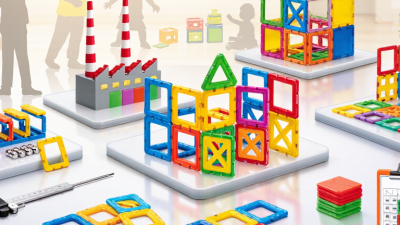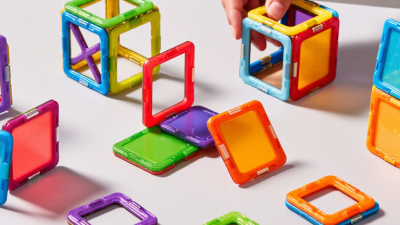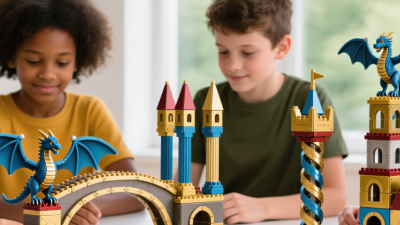
Choosing the best Square Magnetic Blocks in 2026 means looking beyond bright colors and impressive piece counts. The right set should feel engaging in a child’s hands, connect reliably, and support imaginative building without making cleanup a daily battle. A small bridge, a wobbly tower, or a simple window can reveal more about play value than a product photo alone.
This guide examines practical details families can check before buying: magnet placement, tile thickness, edge finish, included shapes, and compatibility with other blocks. Strong connections matter, but they should not be confused with overall quality. We also consider age recommendations, clear safety information, storage, and price. Product labels and current manufacturer details are useful starting points; listings can change, so verify them before purchasing.
More pieces are not always better. A large set may offer variety, yet a smaller, well-made collection can be easier to use and store. No single option suits every child, and claims about durability deserve a little skepticism. The sections ahead compare key features and common trade-offs to help readers match a set to their space, budget, and play style. We aim for useful guidance, not a perfect answer—because even a carefully chosen set may leave one important shape missing.
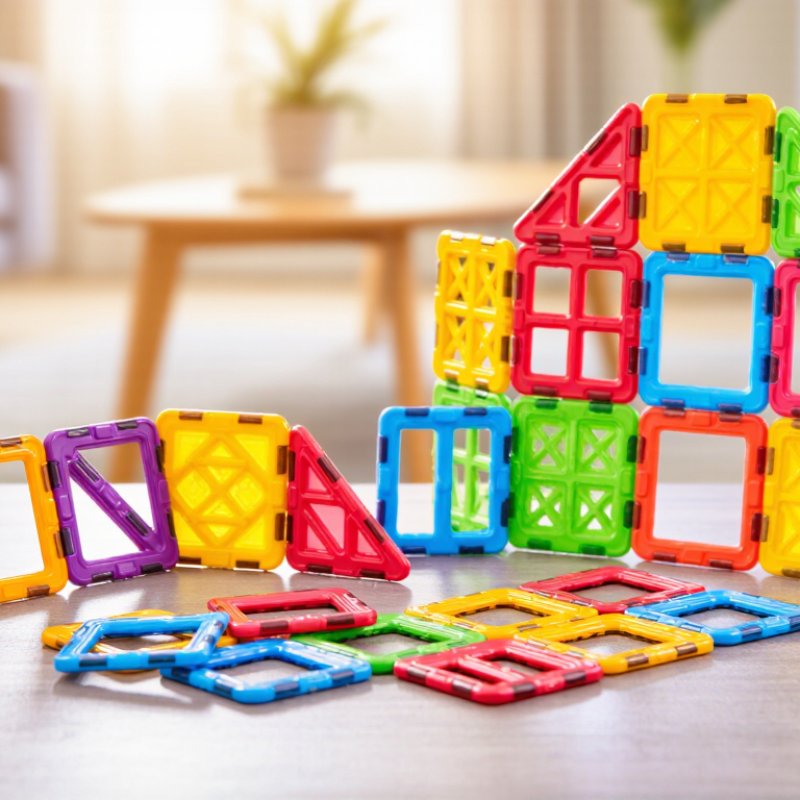
Square magnetic blocks are easiest to compare when “square” describes the tile face, not the whole set. Check whether every piece is a square or whether triangles, windows, and special shapes are included. Tile size matters, too: larger squares cover a wider area, while smaller ones allow finer patterns. Compare edge thickness and corner shape if children will handle the pieces often. Small details matter.
Piece count needs context. A box labeled 40 pieces may contain 40 tiles, or a mix of tiles and accessories. Check the inventory list and count the square pieces separately. A set with many identical squares can build broad walls, but a smaller set with varied shapes may offer more design options. There is no ideal count for every child or project. Count carefully.
Magnet layout affects how pieces connect. Magnets may sit along each edge, near corners, or in a different arrangement, so inspect product diagrams rather than relying on a photo of a finished tower. Look for clear information about polarity, connection strength, and whether edges join consistently. A tall display can look impressive but reveal little about everyday stability. Specifications help, though they do not replace careful handling and age-appropriate supervision. A tidy label can still leave questions. If the layout is unclear, that is worth noticing.

In 2026, the best square magnetic blocks depend on tile dimensions, useful build range, and the cost of each piece. A larger tile can cover a tabletop quickly, but it may be awkward for small hands or compact designs. Small pieces matter. Check the stated side length, then look at the connector layout and tile thickness. These details affect how firmly a wall stands when a child adds a roof or lifts the structure. Product photos can make sets look more compatible than they are, so verify whether pieces from different sets actually connect.
Compare prices by dividing the set price by the number of usable pieces, not just the headline count. Some sets include many small accessories; others offer fewer tiles but more room for towers, houses, or broad floor plans. Check the edges. A simple test is to build a square base, add two walls, and see whether the remaining pieces support a second level. Prices change, and listings may count specialized shapes differently, so the per-piece figure is only a starting point. I would weigh stability and the builds a set can realistically support over a low unit price. No perfect winner.
When comparing square magnetic blocks, treat the age grade as a safety decision, not a decoration on the box. ASTM F963-23 sets toy safety requirements, while 16 CFR 1501 describes the small-parts test and restrictions for toys intended for children under three. The age recommendation should match the product’s design, play pattern, and foreseeable use. A neat age label alone proves little.
The small-parts cylinder gives the check a physical scale. A loose piece that fits entirely inside it may count as a small part; test pieces in different orientations, without squeezing them. Look beyond the intact square blocks. Ask whether smaller magnetic pieces can detach during reasonably foreseeable use or testing, and whether the age grade addresses them. Small parts are not the whole magnet-safety picture, either. Magnetic strength and the chance of separated magnets swallowing together need separate attention.
For a careful purchase, look for clear age grading and accessible compliance information tied to ASTM F963-23 and applicable CPSC requirements. Labels are not proof. I would also check the instructions, warnings, and replacement-part details, then inspect blocks for cracks or loose components. That last step is imperfect; a quick home inspection cannot replace laboratory testing. Still, it can reveal a chipped edge or a piece that no longer stays assembled.
| Evaluation area | What the rules or test address | What to check for square magnetic blocks | Evidence to request |
|---|---|---|---|
| Age grading | ASTM F963-23 is the 2023 edition of the U.S. toy safety standard. Age grading should reflect the intended users and the toy’s design; a printed age label alone does not establish safety. | Check the age range on the packaging and instructions. Consider whether the set includes small components, accessories, or detachable pieces that affect suitability for younger children. | Packaging, instructions, and documentation showing the age-grade assessment and applicable toy safety testing. |
| Small-parts rule | Under 16 CFR Part 1501, toys and other articles intended for children under 3 are subject to small-parts restrictions. A small part is one that fits entirely within the regulation’s small-parts test cylinder. | Check whether any block, connector, cap, or piece that could detach during reasonably foreseeable use or testing fits entirely inside the test cylinder. Do not infer compliance from the exterior dimensions of an intact block. | A test report identifying the tested parts and the applicable 16 CFR 1501 procedure. For relevant products, confirm that the report covers components after applicable use-and-abuse testing. |
| Magnet containment | Small-parts testing and magnet-related hazards are separate considerations. U.S. magnet requirements may also apply depending on the product’s design and intended use. | Look for securely enclosed magnets and evidence that enclosures remain intact under applicable testing. A magnet that becomes accessible or detaches may create an ingestion hazard. | Test documentation covering magnet accessibility, retention, and any applicable magnet-specific requirements; check that the tested construction matches the item being sold. |
| ASTM F963-23 coverage | ASTM F963-23 contains toy safety requirements and test methods. The applicable sections depend on the toy’s materials, construction, and intended age group. | Check that the evaluation covers the complete magnetic-block set, including coatings, edges, seams, magnets, and any included accessories—not merely a sample of the raw material. | A report specifying ASTM F963-23, the product or model tested, test scope, results, and report date. |
| Build and finish | Visual inspection can identify apparent defects but cannot replace required laboratory testing. | Inspect for cracks, sharp edges, loose seams, peeling coatings, and visible or exposed magnets. Stop using blocks that are damaged or have parts coming loose. | Clear product photographs, care instructions, and a documented inspection or quality-control process. |
| Overall buying check | A product’s age label, appearance, or seller statement by itself is not proof that it meets applicable safety requirements. | Compare age guidance, small-parts results, magnet containment evidence, and the exact product identity covered by the reports before choosing a set. | Prefer traceable, product-specific test records. If documentation is missing or does not match the product, treat compliance as unverified. |
Safety note: This comparison is a screening guide, not a certification or legal determination. Applicability depends on the product and its intended age group; consult current CPSC requirements and qualified testing professionals for compliance decisions.
What Are the Best Square Magnetic Blocks in 2026?
A 50 kG²·mm² flux-index limit is not a universal measure of magnetic-block safety. It applies only within the regulatory or technical scope that defines the value, test method, and product category. Check the relevant document’s date and wording before comparing products. A limit without its testing context can mislead.
For square magnetic blocks, compare dimensions, magnetic strength, casing durability, and clear product documentation. Ask how the flux index was measured and whether the tested configuration matches the block you plan to use. A neatly printed number is useful, but it is not the whole story. Small differences in size or measurement setup may affect comparisons. I would not treat the threshold alone as proof that a block is suitable for every setting.
Tips: Keep the test report with the product details. Confirm the units and method. If the applicable scope is unclear, ask a qualified compliance professional before relying on the 50 kG²·mm² figure.
A credible ranking should separate verified safety from attractive packaging. Check for documented testing against ASTM F963-23, then inspect seams, corners, and magnet containment. The U.S. Consumer Product Safety Commission estimated 231,700 toy-related emergency department visits in 2023 in its Toy-Related Deaths and Injuries report. That figure covers toys broadly, not magnetic blocks alone. Still, it shows why safety evidence matters. Small detail. Big consequence.
Connection strength deserves a repeatable test, not a hand-tug. Compare how many blocks hold a simple wall together, then repeat after drops and regular rebuilding. Record cracks, loose panels, and changes in magnetic pull. Durability is not just surviving one fall. A set that feels strong on day one may loosen at the corners later. Be cautious: manufacturers’ claims are not independent test results.
For value, compare the price per usable square block, while noting whether the set includes useful shapes or mostly fillers. Rank sets with accessible safety documentation first, consistent connections second, and wear resistance third; use price to separate close contenders. This is less flashy than a single “strongest” label, but more useful to families. One limitation: without comparable lab tests, durability scores remain partly judgment-based. A transparent ranking should say so.