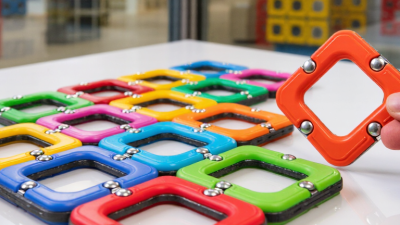
China Top 10 Light Up Magnetic Blocks Manufacturers
Light Up Magnetic Blocks combine familiar magnetic construction with small LEDs, creating colorful towers, windows, and glowing patterns. Their appeal is easy to see on a playroom table: a child connects two translucent panels, switches on the light, and watches the structure change after dusk. Yet appearance alone cannot tell buyers whether a product is well made. Magnet strength, edge finishing, light consistency, battery access, and clear age guidance deserve closer attention.
This guide introduces ten China-based manufacturers associated with Light Up Magnetic Blocks and offers a practical starting point for comparing them. It considers product range, customization options, production information, sample availability, and the quality documents suppliers can provide. Ask for close-up photos, assembly details, and written answers about materials and testing. Details matter. A polished catalog is useful, but it is not proof of dependable production. Supplier capabilities can also change, and public information may be incomplete; that deserves honest attention. Buyers should confirm current specifications, order terms, and market-specific requirements directly with each company. A sample in hand can reveal loose connections, uneven illumination, or packaging weaknesses that a product page may miss. Not every supplier will suit every project. By focusing on verifiable information and thoughtful questions, readers can build a clearer shortlist without treating any ranking as a guarantee.
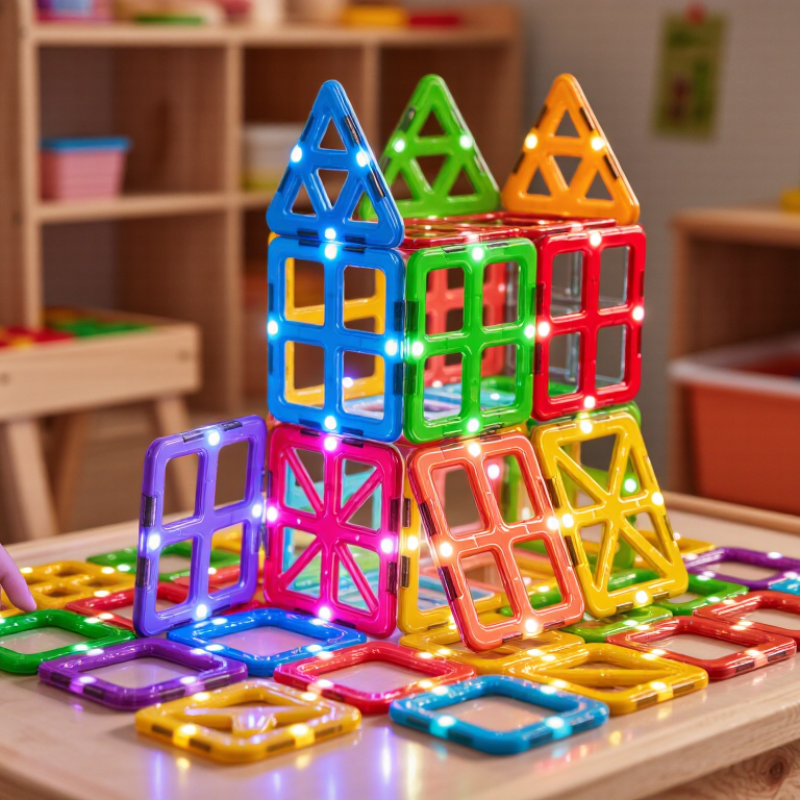
What Light-Up Magnetic Blocks Are and How They Work
Light-up magnetic blocks combine translucent plastic pieces, embedded magnets, and small LED circuits. Magnets sit inside the block edges, allowing pieces to connect when their poles attract. Turn a block, and the connection may weaken or repel; children can feel the difference as they build. The LEDs shine through colored panels, creating bright spots on a tabletop or wall. Small details matter. Designs vary: a button may activate the light, while some blocks light only when connected or pressed. In most versions, a battery supplies power through a simple circuit. The glow is engaging, but it does not make every structure stable.
Hands-on play reveals a useful limitation: uneven connections can make a tower wobble, even when the lights look impressive. Battery access and block seams also deserve attention. The U.S. Consumer Product Safety Commission’s 2023 Toy-Related Deaths and Injuries report estimated 231,700 toy-related emergency-room-treated injuries among children aged 14 and younger. That figure covers toys broadly, not magnetic light-up blocks specifically. Still, it supports checking age guidance, damaged pieces, and battery compartments before play. Adults can also look for securely enclosed magnets and batteries, then test a few blocks for consistent lighting. One block may glow dimly. That is easy to overlook in a bright room.
Key Features and Common Uses of Light-Up Magnetic Blocks
Light-up magnetic blocks combine translucent panels, embedded LEDs, and magnetic edges, letting children build shapes that glow when room lights dim. Clear, colored tiles make simple structures easier to inspect: a blue roof, a red tunnel, or a layered tower. Useful features include evenly diffused light, sturdy seams, smooth edges, and controls that are easy for small hands. That matters. A 2023 Grand View Research report valued the global STEM toys market at USD 8.1 billion in 2022 and projected 8.7% annual growth from 2023 to 2030. This broad category includes many products, not just illuminated magnetic blocks, so it indicates context rather than specific demand.
In classrooms, these blocks can support color sorting, symmetry, pattern-making, and early discussions of light and shadow. Children may test how a low bridge changes when one tile moves, then compare the bright and dark sides. At home, they suit open-ended construction, especially on a clear table where loose pieces remain visible. Still, lights can distract. A practical setup uses a few illuminated pieces alongside unlit tiles, keeping the focus on building rather than flashing effects. Adults should check that battery compartments stay closed and magnets remain securely enclosed. One limitation is that bright LEDs may look vivid in a shop but less comfortable in a dim bedroom; adjustable brightness is worth checking.
How to Evaluate Chinese Light-Up Magnetic Block Manufacturers
When evaluating Chinese light-up magnetic block manufacturers, look beyond catalogue photos. Circana’s 2023 global toy-market report recorded a 7% sales decline across 12 tracked markets, increasing pressure to control costs. Low quotes deserve careful scrutiny. Ask for a bill of materials, sample lead times, and clear explanations of LED, magnet, and battery choices. Compare several production samples, not just one. A bright display sample may conceal loose panels or uneven magnetic connections. Details matter.
Request current, model-specific test reports against applicable requirements, such as ASTM F963 and ISO 8124. Check that the reports identify the exact materials and product version. Ask for test-laboratory details and batch traceability. During sample review, inspect magnet enclosure, battery access, sharp edges, and performance after repeated drops and connection cycles. Ask for evidence. A supplier’s quality plan should show incoming-material checks, production inspections, and procedures for handling failed units. Factory audits help, but they do not replace product testing. I would also verify whether a supplier can reproduce the approved sample consistently; this is easy to overlook, and a neat sample alone proves very little.
How to Evaluate Chinese Light-Up Magnetic Block Manufacturers
Suggested evaluation weights for comparing suppliers. These are buyer-defined priorities, not rankings or verified scores for specific manufacturers.
Prioritize documented toy-safety compliance and secure magnet retention. Verify certificates, test reports, sample performance, quality-control procedures, and delivery terms directly with each supplier.
China’s Top 10 Light-Up Magnetic Block Manufacturers
China’s Top 10 Light-Up Magnetic Block Manufacturers
When comparing China’s top 10 light-up magnetic block manufacturers, look beyond product photos. Ask how each factory checks magnet strength, light consistency, and piece-to-piece fit. A sample should connect firmly, illuminate without flickering, and have smooth edges. These small details affect play and reduce avoidable returns. A “top ten” list is only useful when its criteria are clear.
Market data adds context, not a product ranking. Circana’s 2023 global toy industry review reported a 7% decline in toy sales across 12 tracked markets. That makes reliable quality control and clear product differentiation worth examining. Request dated test reports, material specifications, and written inspection procedures. Confirm that samples match production units, and ask how defects are recorded. Some factories may share impressive capacity figures; those figures alone do not prove consistent workmanship.
Tips: Test several blocks in a dim room. Check for loose magnets, uneven lighting, and battery access. Ask for the expected light-up time and replacement guidance. One sample is not enough.
How to Choose a Manufacturer for Your Needs
Choosing a light-up magnetic blocks manufacturer starts with the product, not the catalog. Ask how magnets are sealed inside each tile and how the casing is checked after repeated drops. Request material specifications and test reports for the finished toy, not just its raw plastic. For illuminated pieces, confirm battery access, switch durability, and replacement-part availability. Small details matter.
Order samples from two or three manufacturers and compare them in person. Check whether tiles connect evenly, lights work consistently, and edges feel smooth. Try the blocks under ordinary play conditions, then inspect them for loose parts or cracks. Ask about customization, minimum order quantities, production capacity, and realistic lead times. Clear answers are useful. Vague promises are not.
A polished sample can hide uneven factory production; I would not treat one good unit as proof. Ask how each batch is inspected and whether the factory can share dated quality records. Confirm packaging protects the tiles and keeps small accessories organized. Discuss how defects are reported and handled before placing a large order. Communication matters, though it is easy to overlook when prices look attractive. Request a written quotation with product details, testing scope, and delivery terms.